ten things i hate about the road reconstruction of nicollet on the former k-mart property

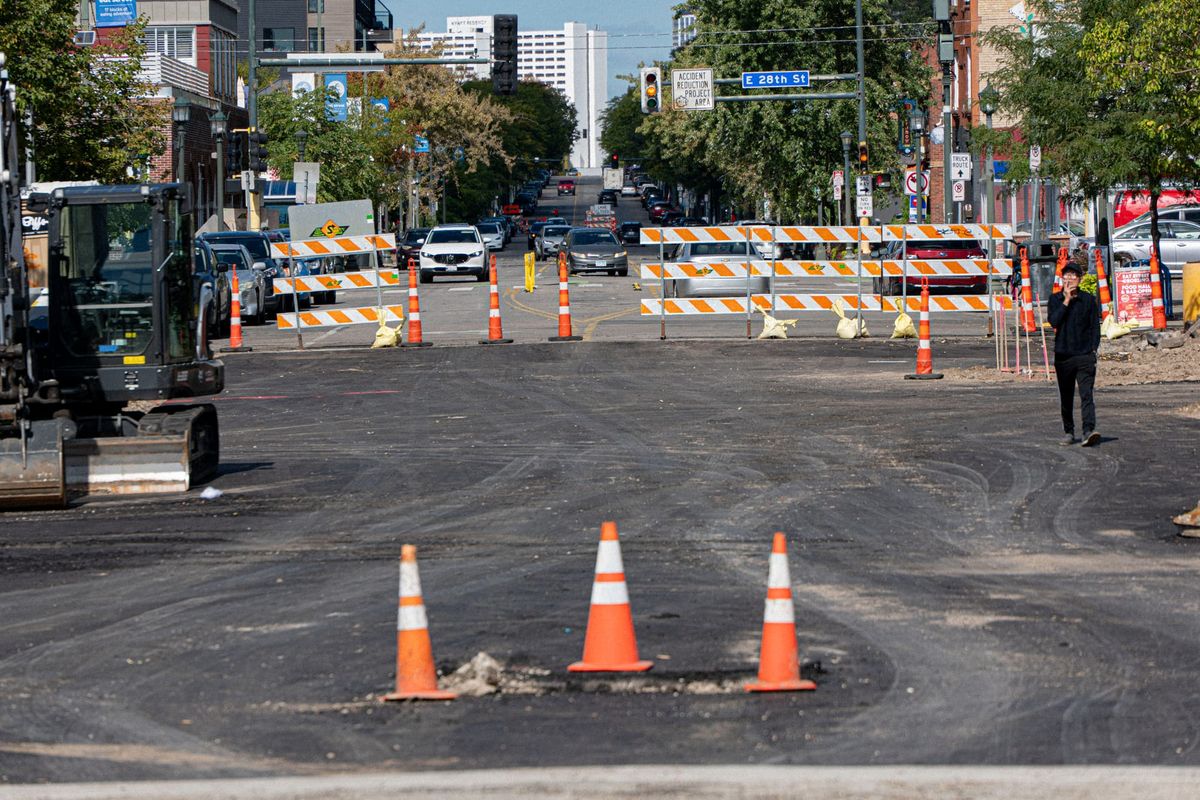
Well to be honest, there are more than ten things that I hate about the design, but the reality is that my grievances also apply to all roads and ongoing reconstruction efforts in general. This will be a broad, meandering, non-linear critical overview of systemic challenges associated with our relationship to the land through things like roads, construction, engineering/planning, and more by using the current construction progress of Nicollet as a scapegoat for my concerns. This small project was designed and built to reconnect Nicollet from Lake St to the north a couple of blocks where previously a large box store inhibited passage along this corridor for decades.
I'm glad that something is happening to connect Nicollet back up with itself, a ridiculous thing to have to be glad about. There is something that just feels so bleh about the design, but that is to no surprise given the fact that all roads are predominately designed for individual automobiles through planning and engineering focused on the speed and movement of these individual automobiles. Having worked in the industry for nearly 15 years, I have a lot of gripes with the systematized manner in which "experts" design infrastructure. The history behind roadway design and the rules which these experts design to is rather brief in the grand scheme of things, and I do not wish to cover that here, but the reality is that roadways are socially and culturally seen as places to move cars, and that is it.
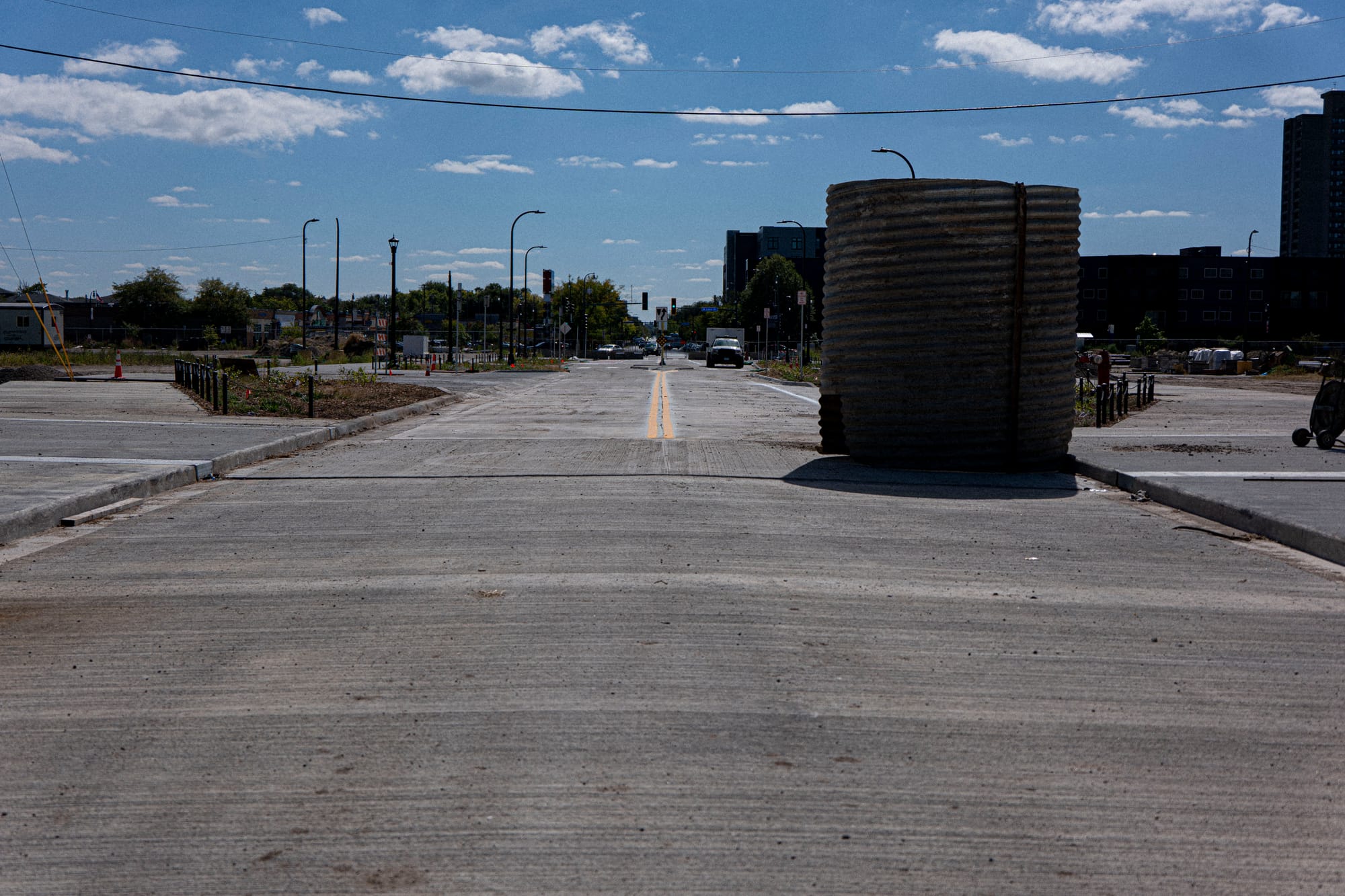
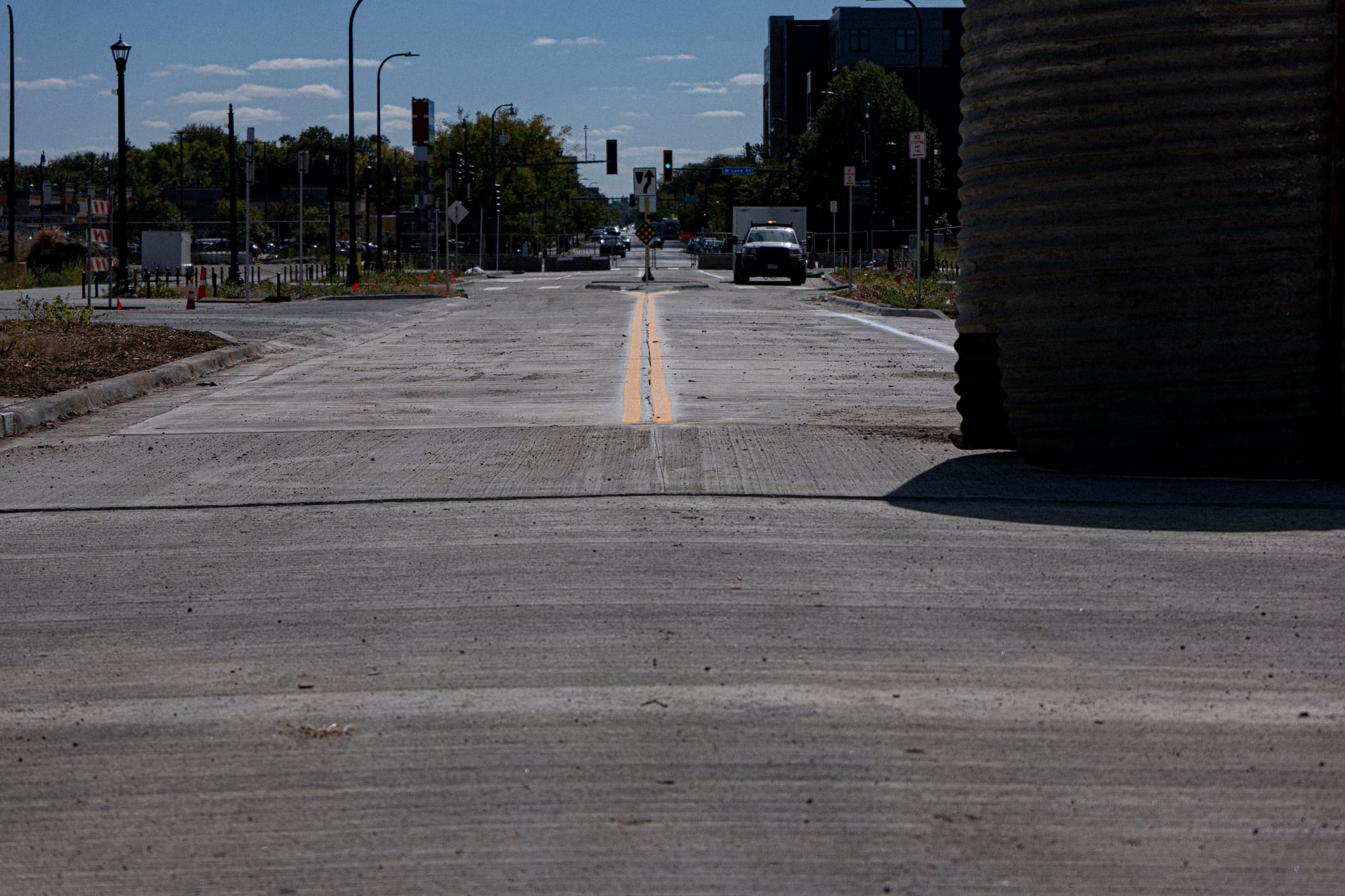
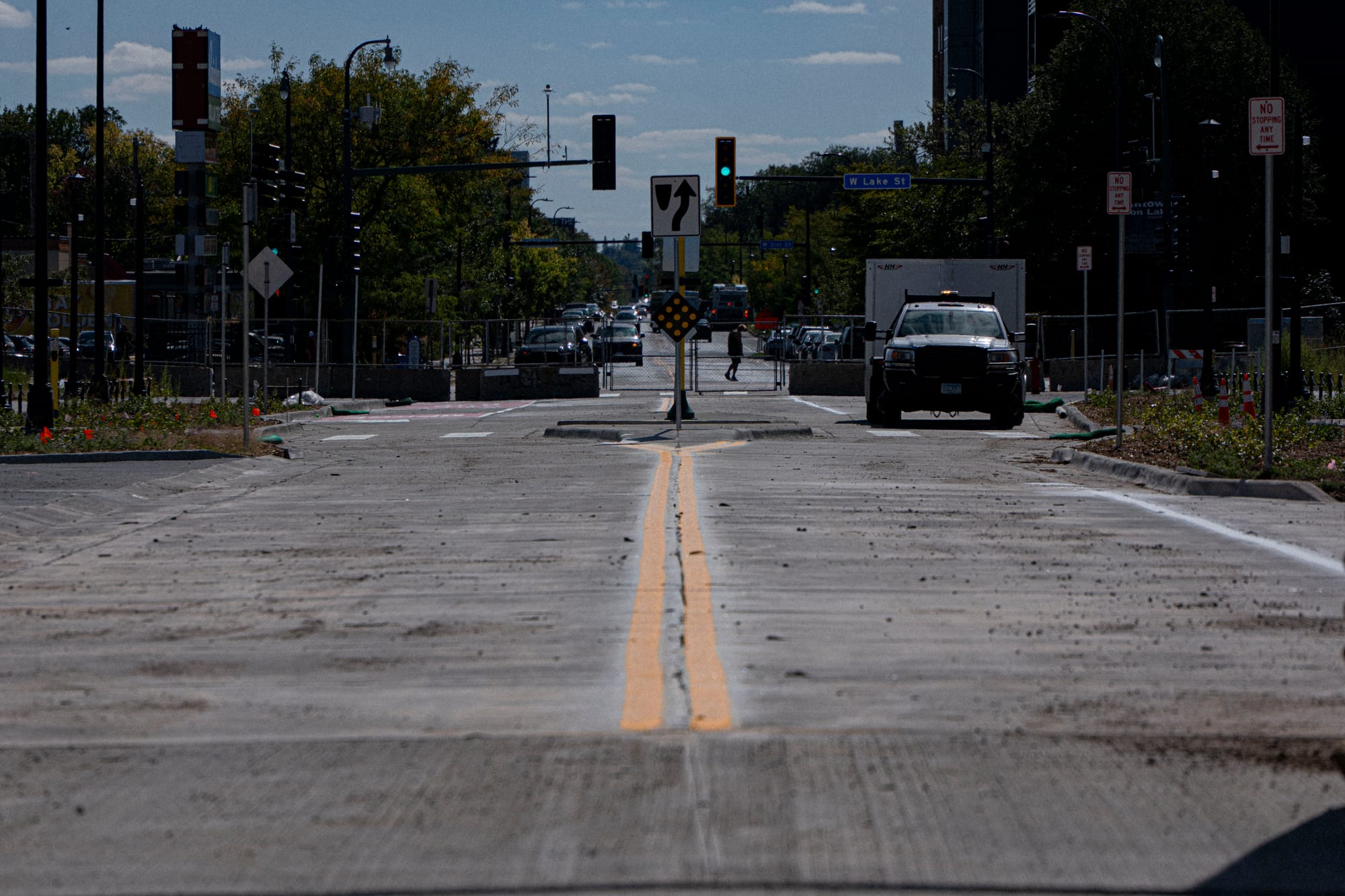
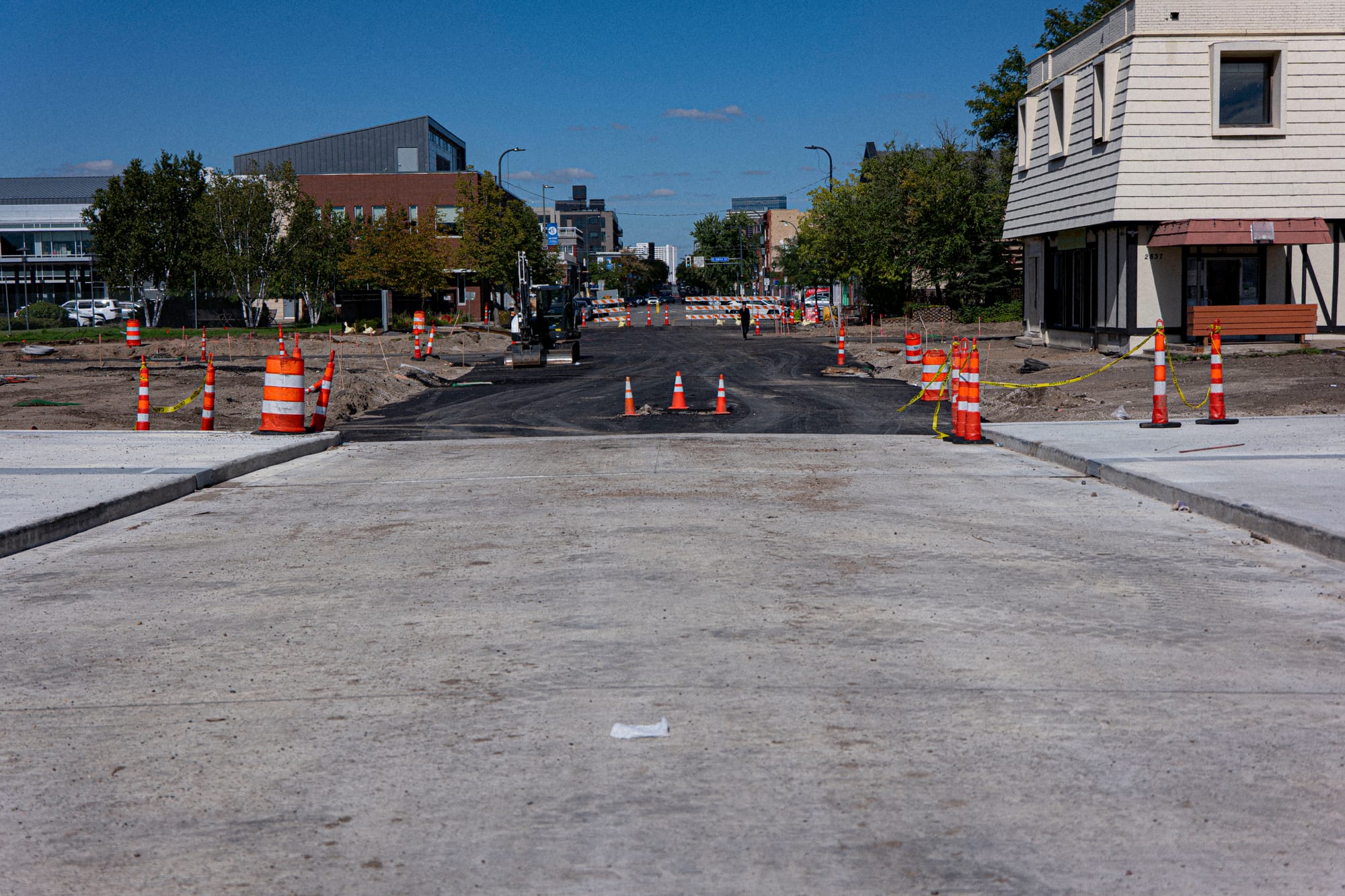
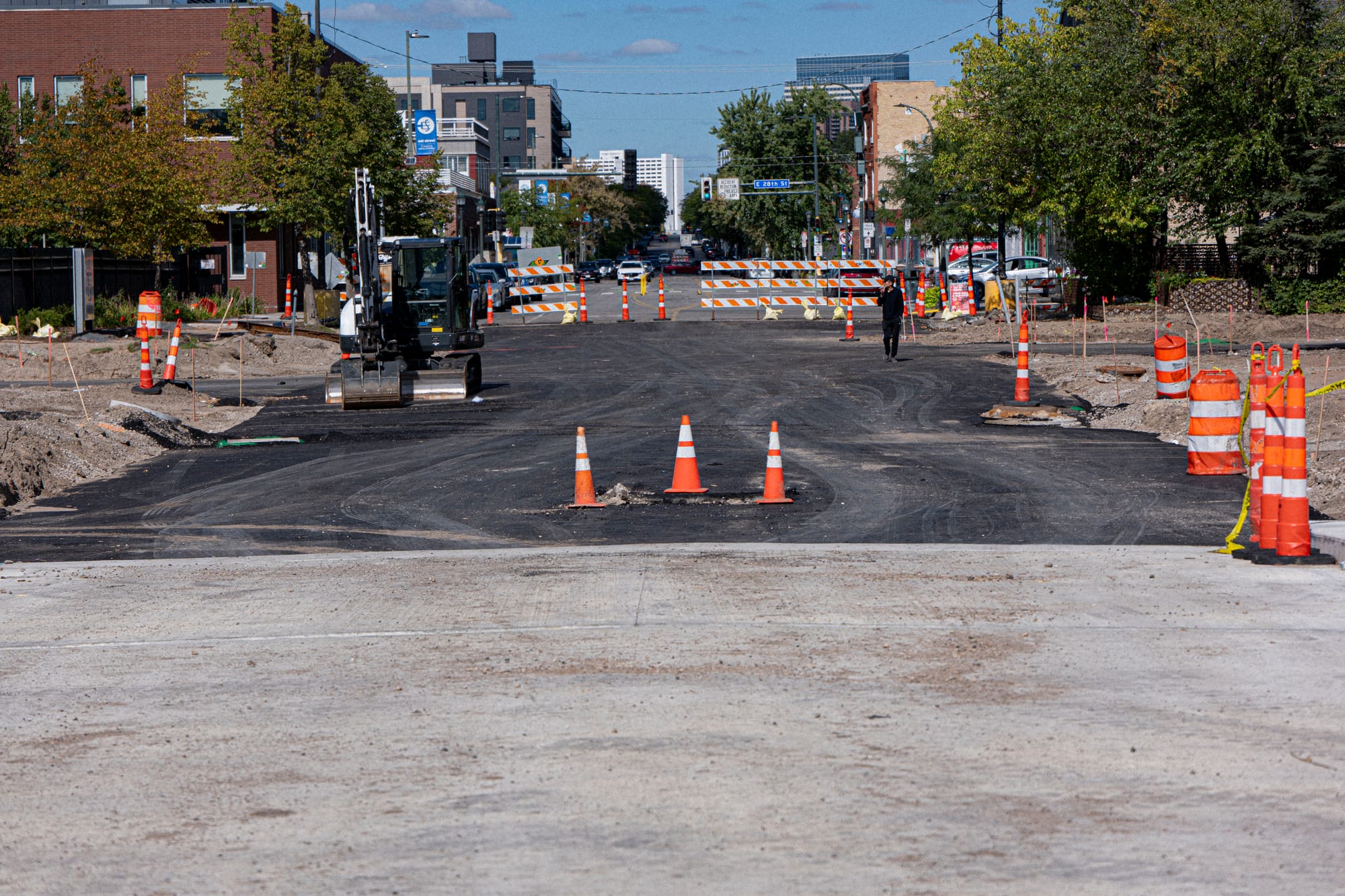
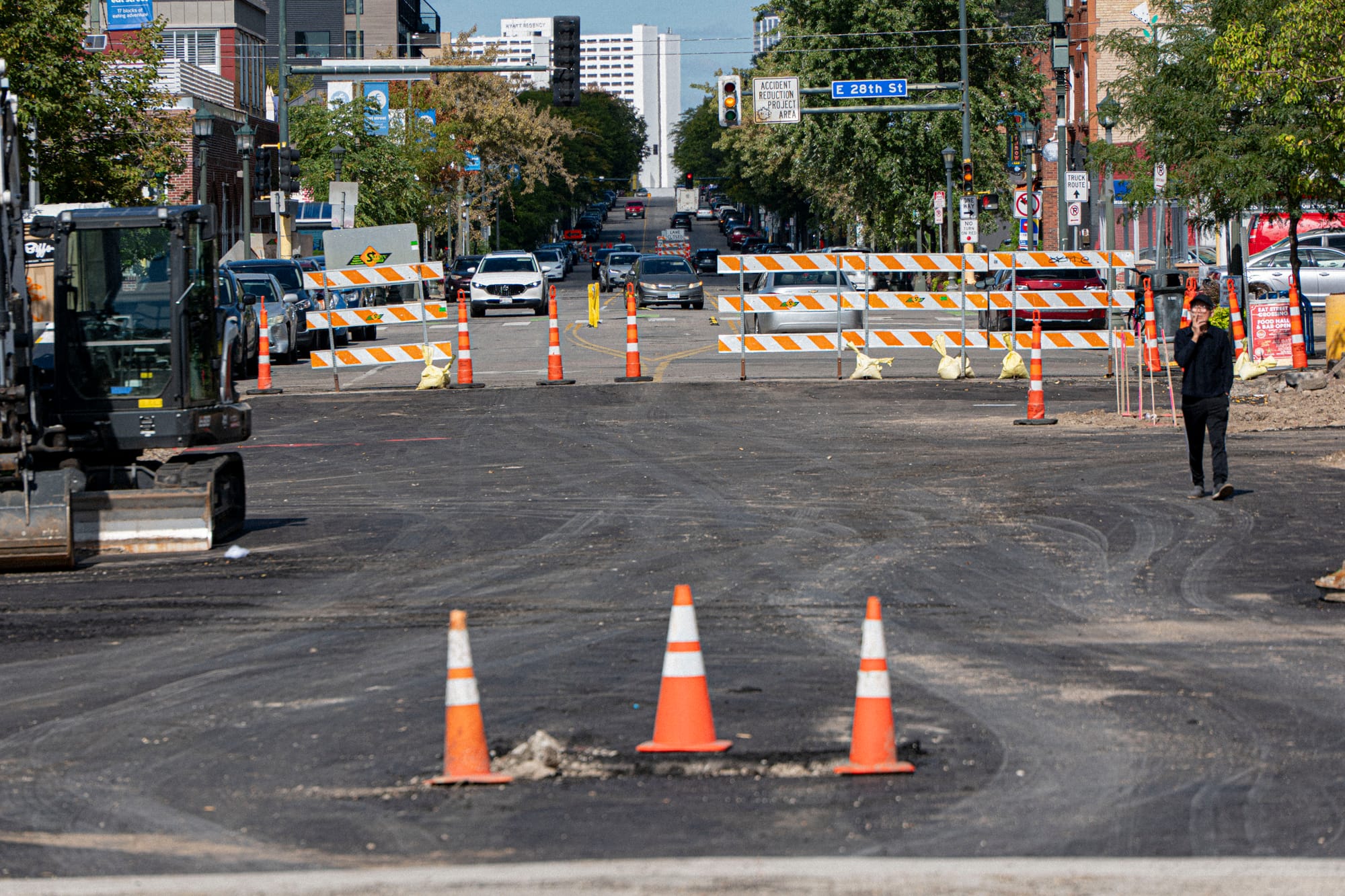
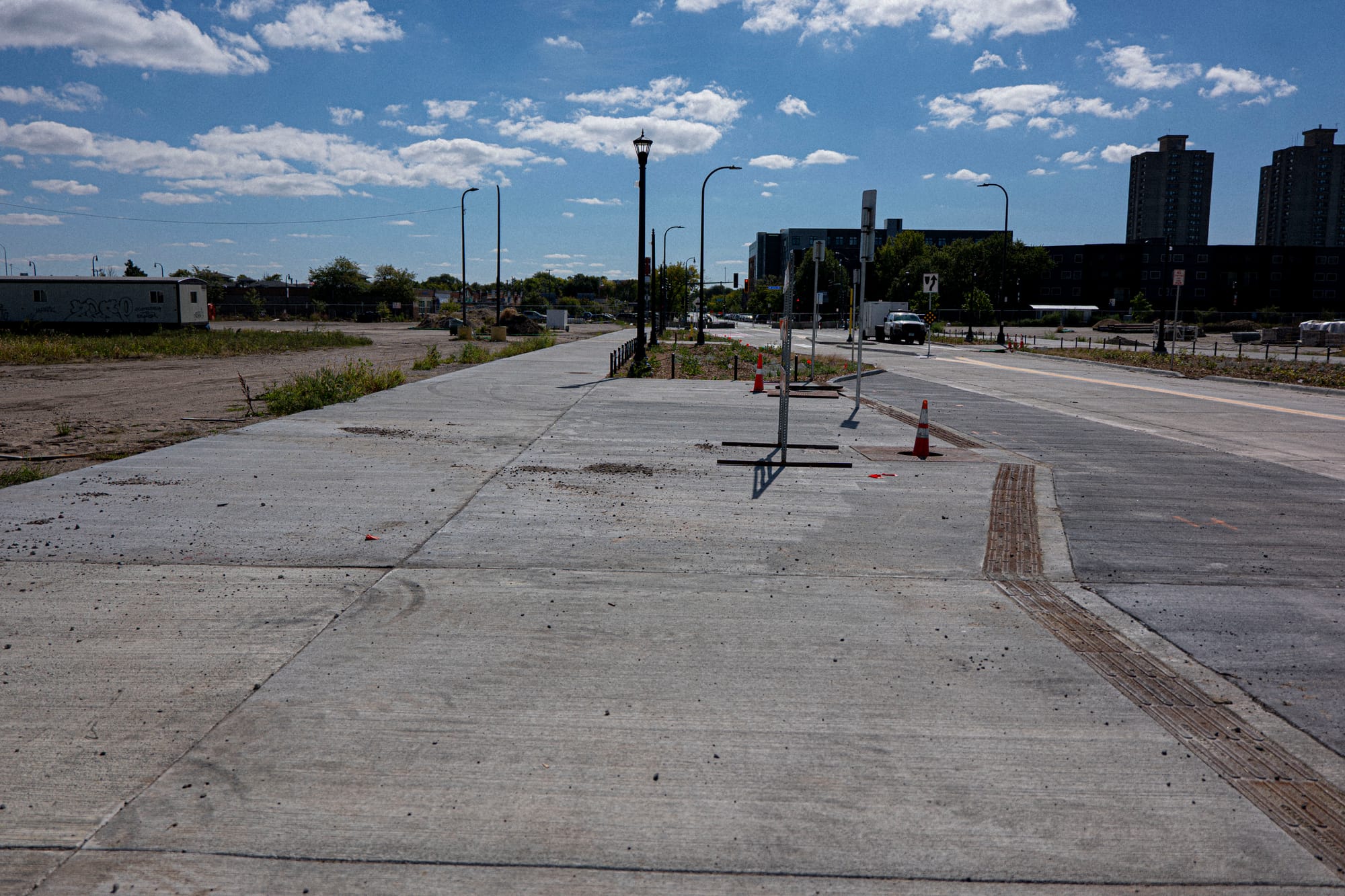
I decided to stand at random segments along the corridor and take pictures from some differing zoom levels. I tried something like 28mm, 45mm, 90mm, and 200mm at each location. I find the shift in perspectives interesting because it can really change how the wideness of certain elements change with shifting perspectives. There will be text between the images (that will come in sets of four), and there is most definitely a lot of boring pictures here, but again, this is an exercise in perspective, so feel free to scroll on through!
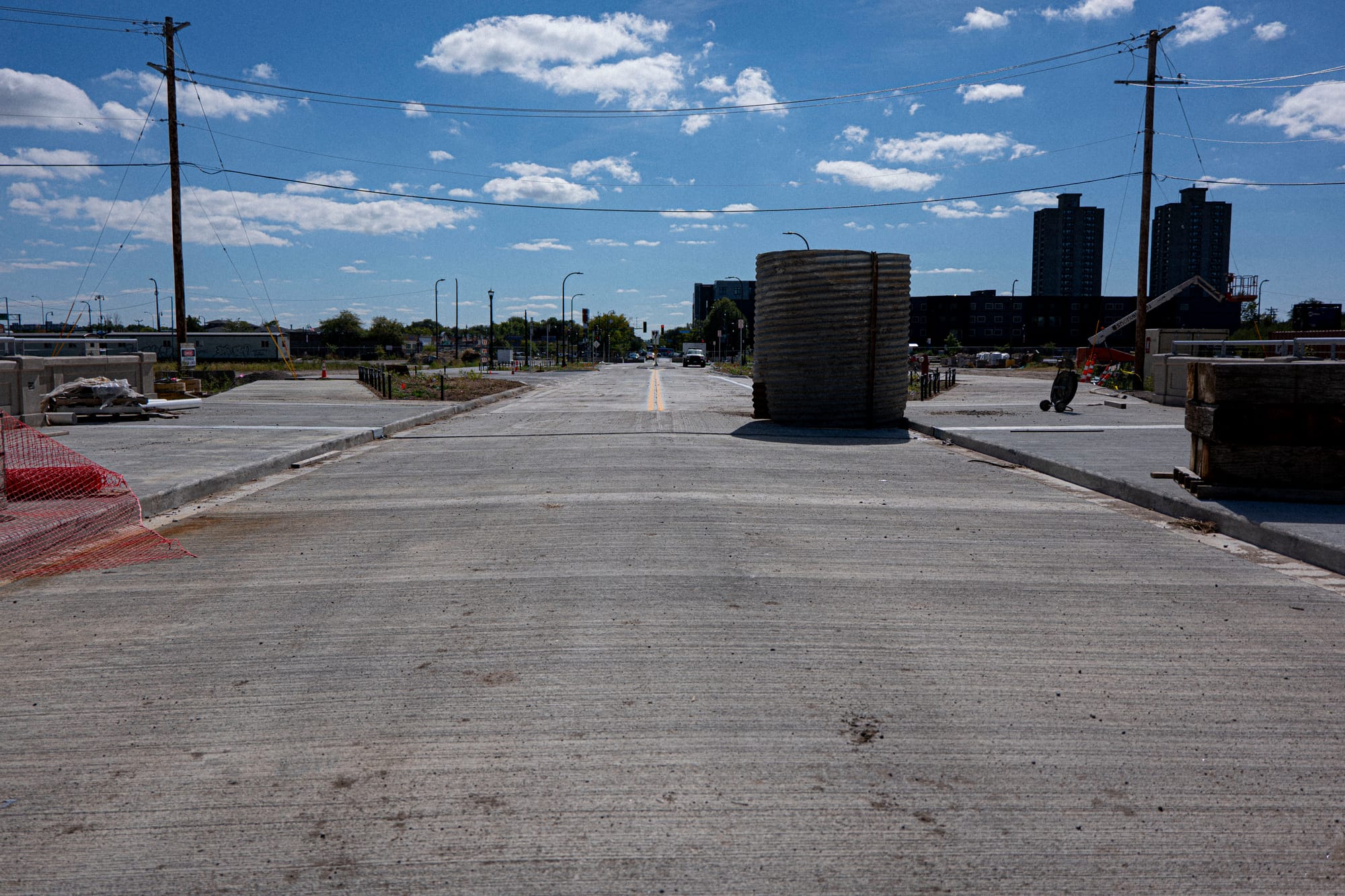
From the north end, standing on the bridge over the greenway, looking south towards Lake St
I think we all would benefit from having more nuance when it comes to considering how we use the space that we live within. By this, I mean that it is important to consider the history of the land, beyond just one's own lifetime, and beyond civilization in general. I prefer to remember that we live as but a mere snapshot on the cosmological scales of the universe. Somehow, we have this opportunity to live in this image of space and time that feels infinitely complex even though life and perception are just mere glimpses into all that reality has to offer.
The way we use our land is a direct reflection of how we relate to nature. That is not a controversial statement, but it is a fact of how life works. I started reading one of Wendell Berry's books written on the topic of culture and agriculture, and they argue that our mechanistic forms of agriculture is directly reflected in the way culture functions, or maybe a better way to state it is that the ways in which we relate to the land and to food production is directly reflected in our daily lived experiences in ways that we don't recognize on the surface, and it is worth examining these habits.
In my opinion, the primary way this reflection appears in an urban environment is through the absence of food production in the urban environment. For most of urbanity, food is just there, it is in the grocery stores and convenience stores that we frequent, but how did it get there and where did it come from?
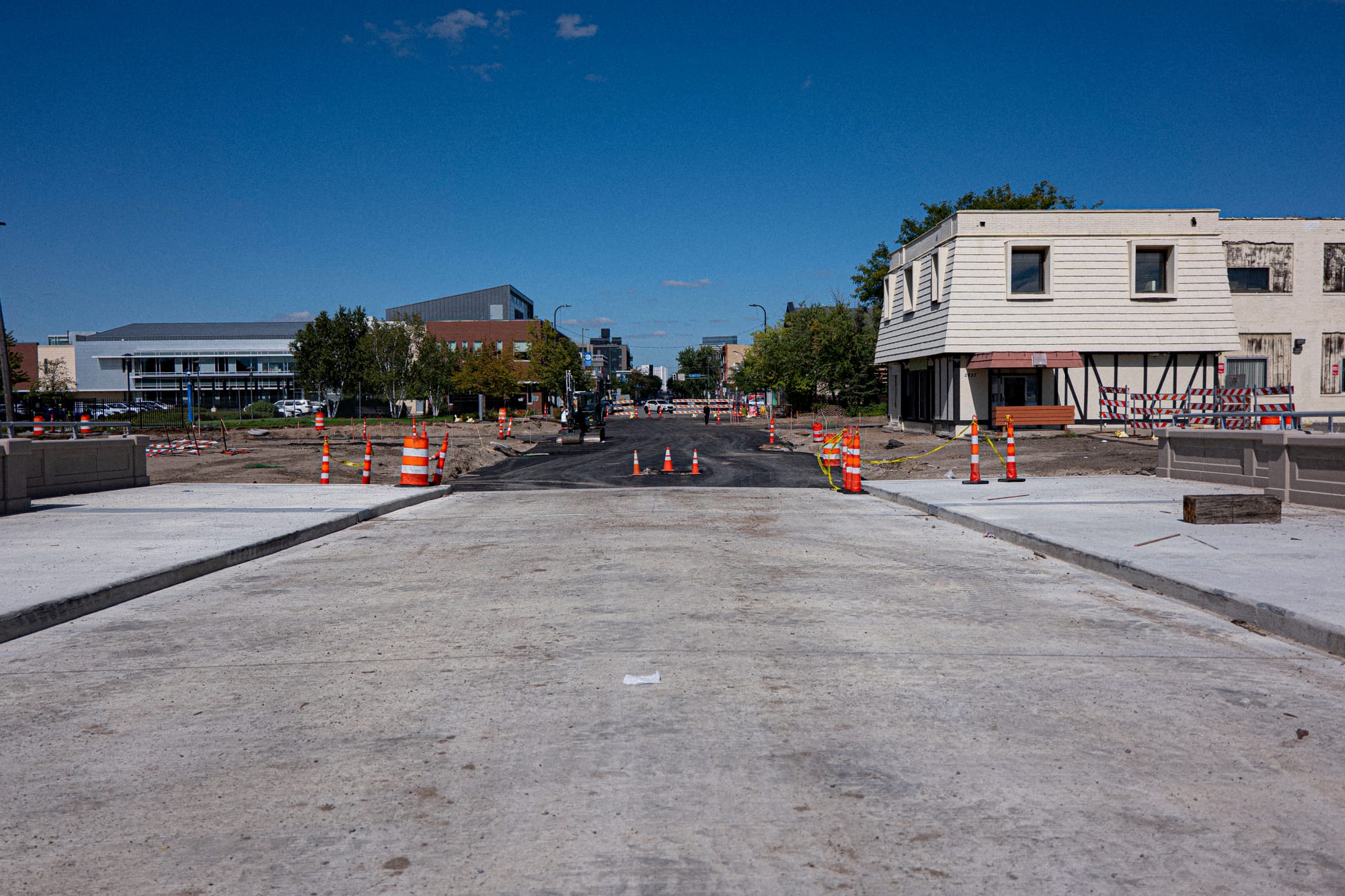
From the north end, standing on the bridge over the greenway, looking north towards 28th St
I have just started reading Berry's book, so I don't claim the ability to outline this whole argument, but I tend to agree with this assessment given our cultural relationship with food determines how food originates and is distributed within our transportation system.
Additionally, the amount of land we dedicate to agriculture is astounding, and to no surprise it is done in a wasteful manner that contributes to climate change as much if not more than fossil fuels and its emissions. I don't recall the exact statistic (from another book that I'm too lazy to find), but it was something along the lines of 50% of the world's habitable land space has been turned into agriculture. That is SO MUCH land.
Counter to ag-land, if you add up the total land area of all urban/developed cities, that totals up to something like 1% of the total habitable land area. My point here is not to argue for urban versus rural on the context of climate change, but to simply point out how we use the land as a species.
I find it illuminating to imagine a birds eye (astronauts eye?) view of the world, one floating in outer space looking back at the rotating earth. From this perspective, one can see this network of city centers collectively containing billions of people. Each city functions like a massive consumption node where food is shipped in from the rest of habitable land, which has been shaped primarily by agriculture, and connected to our cities through our transportation networks.
A bit south of the bridge, standing on the sidewalk on the east side of the road looking south towards Lake St
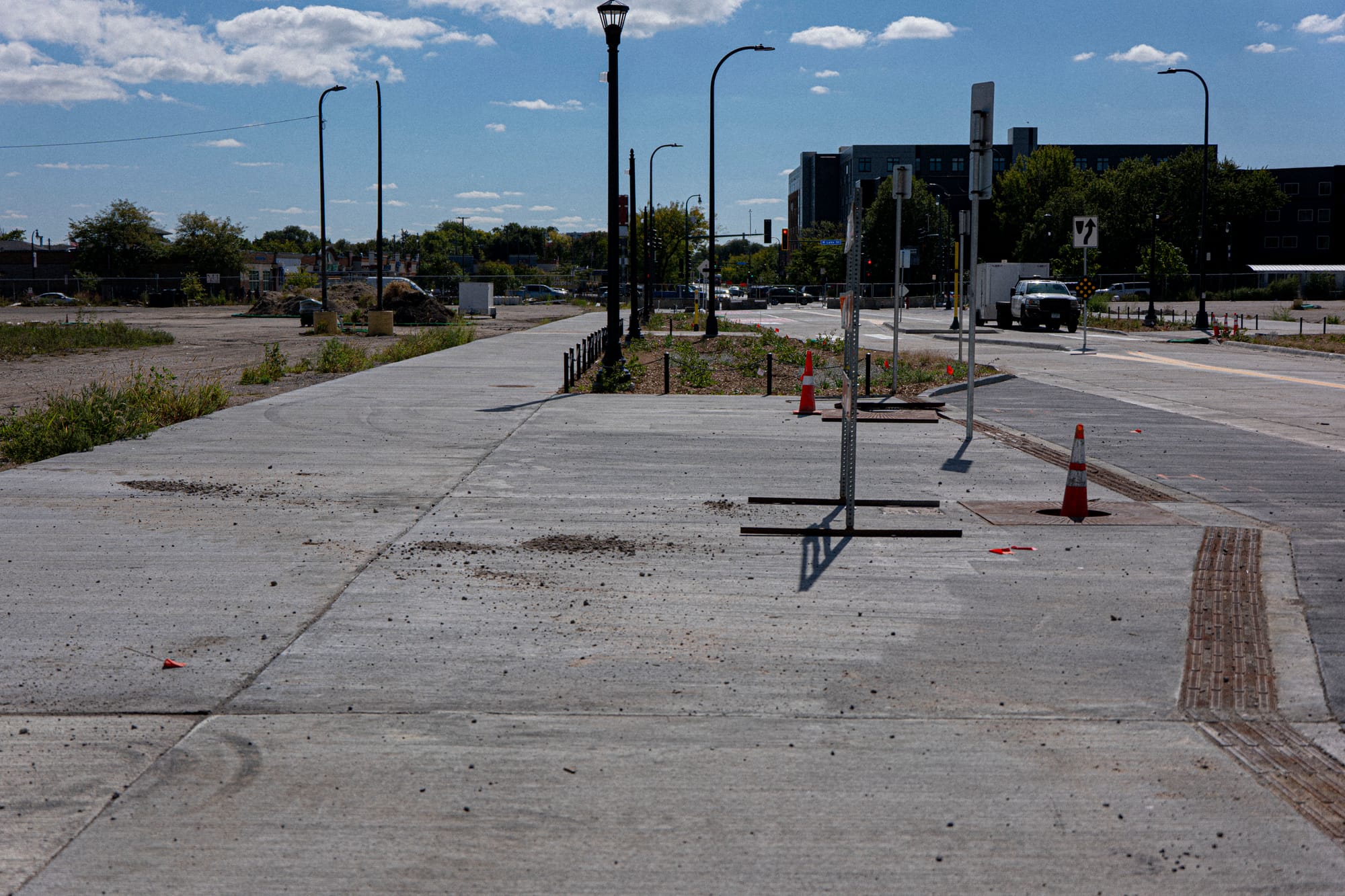
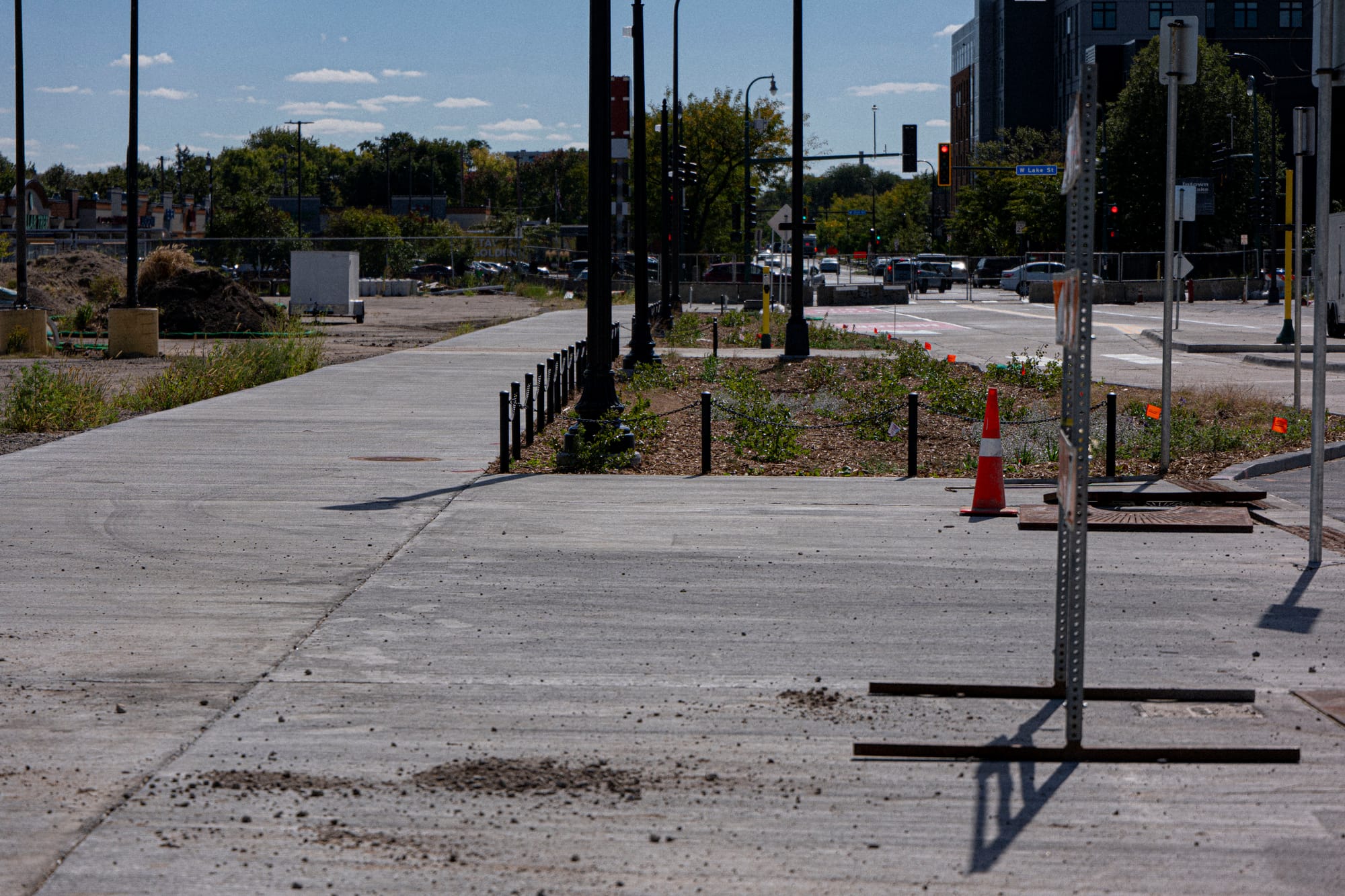
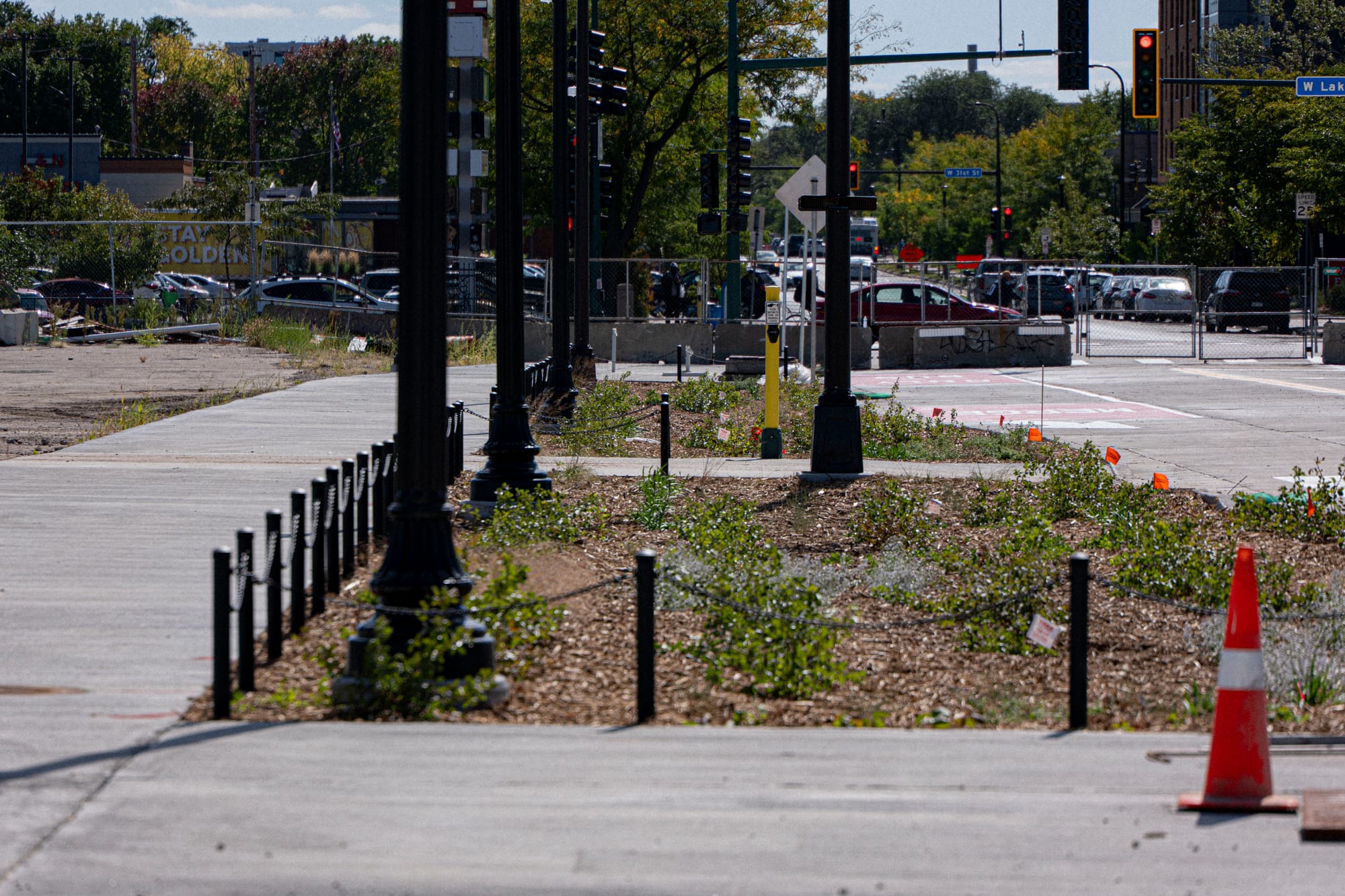
So why does transportation matter when it comes to food? Well, I think the fact that those of us who live in urban nodes tend to lack a certain level of basic appreciation for the land and food. It is not necessarily our fault–the system is designed this way after all–but we contribute to the system, so we do have the power to change how the system works to a degree. With systemic issues, individual action–let alone collective action–can feel quite debilitating in the face of systemic inequality, climate collapse, and mass-state violence.
That to say, I think individual action, and more importantly, individual change and willingness to relate to the world in new ways is vitally important. It is also helpful to recognize the assumptions that determine how the transportation system operates within this larger system.
Engineering standards around roadway design are optimized for cars because engineers design roadways for cars because that is how the education system teaches them how to design roads, and that is how the industry functions as well. Yes, things are slowly changing and it is not as black and white as I described, but I think anyone who has advocated for more pedestrian friendly streets knows that it is an uphill battle having to deal with the many facets of culture and society that see cars as a necessary function of living in society.
A bit further south, middle of the road, looking south towards Lake St
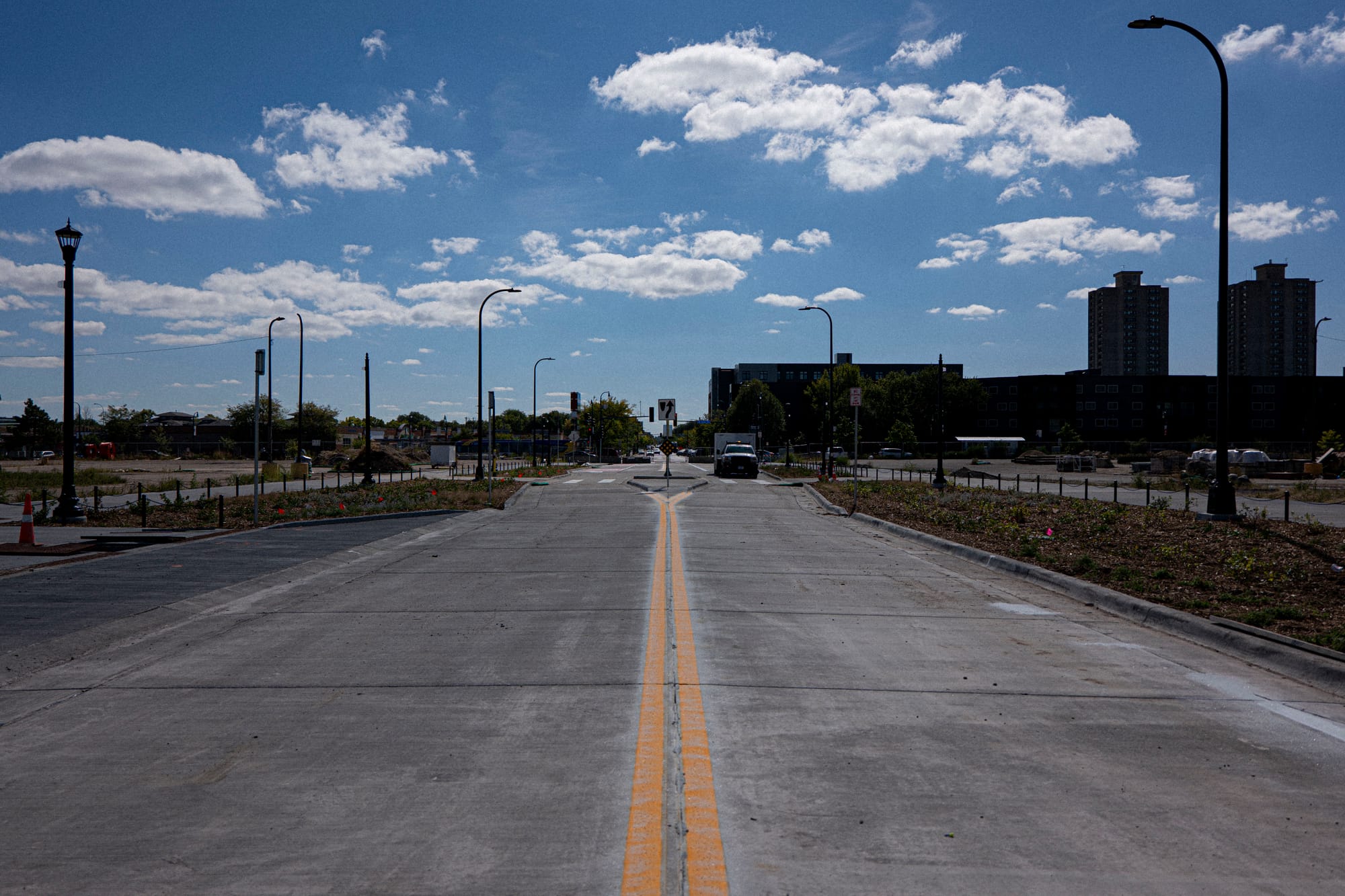
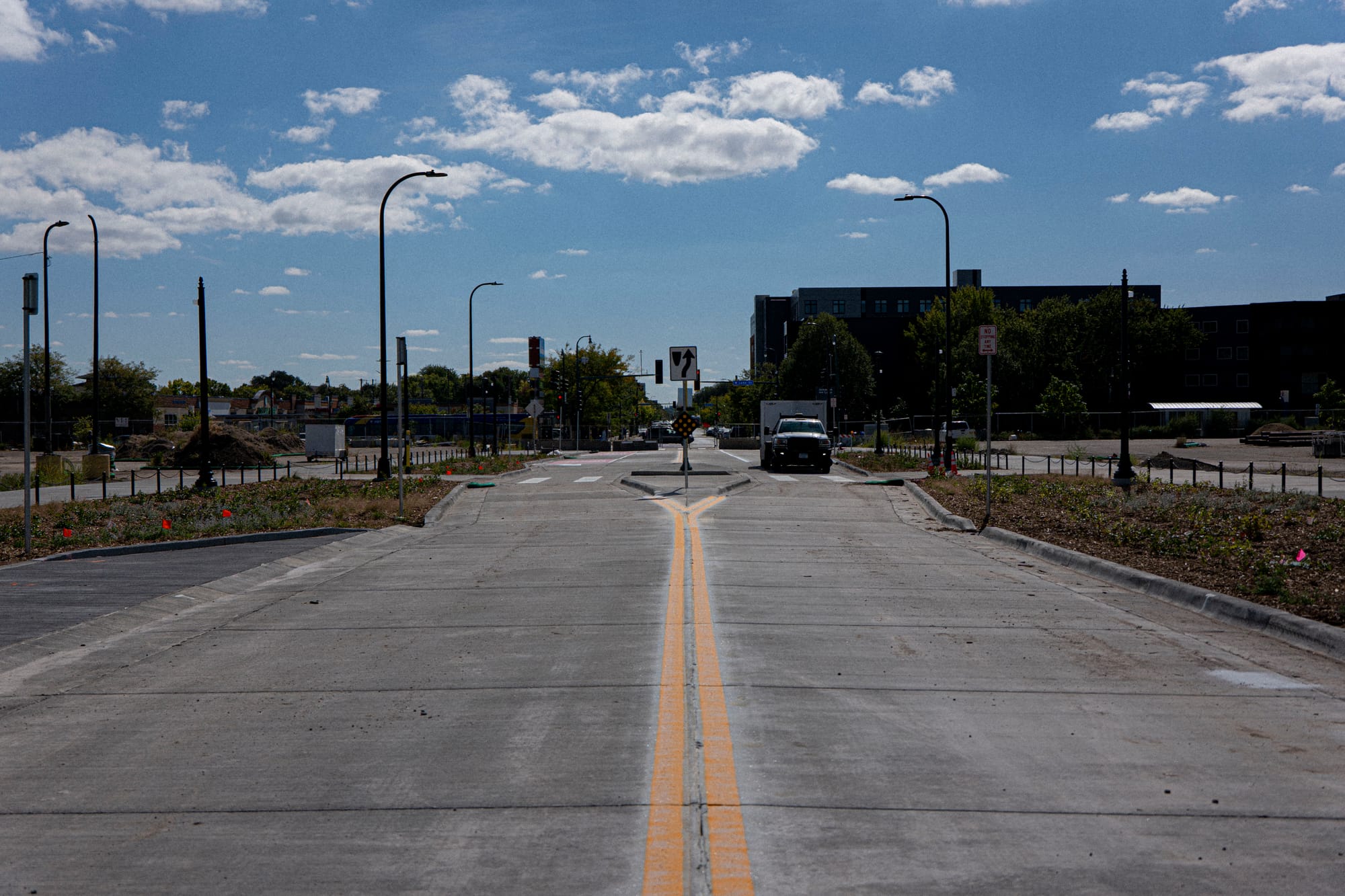
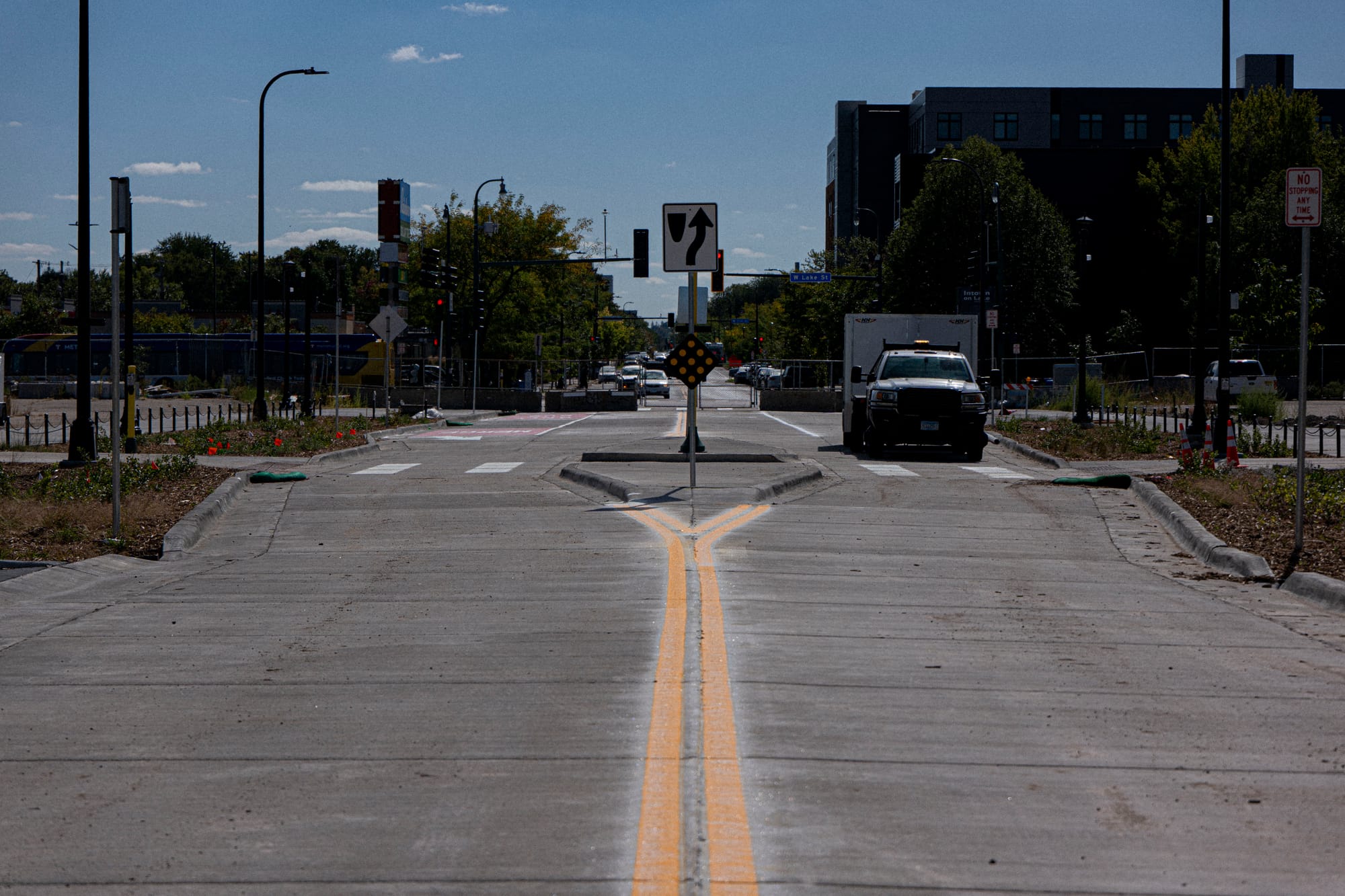
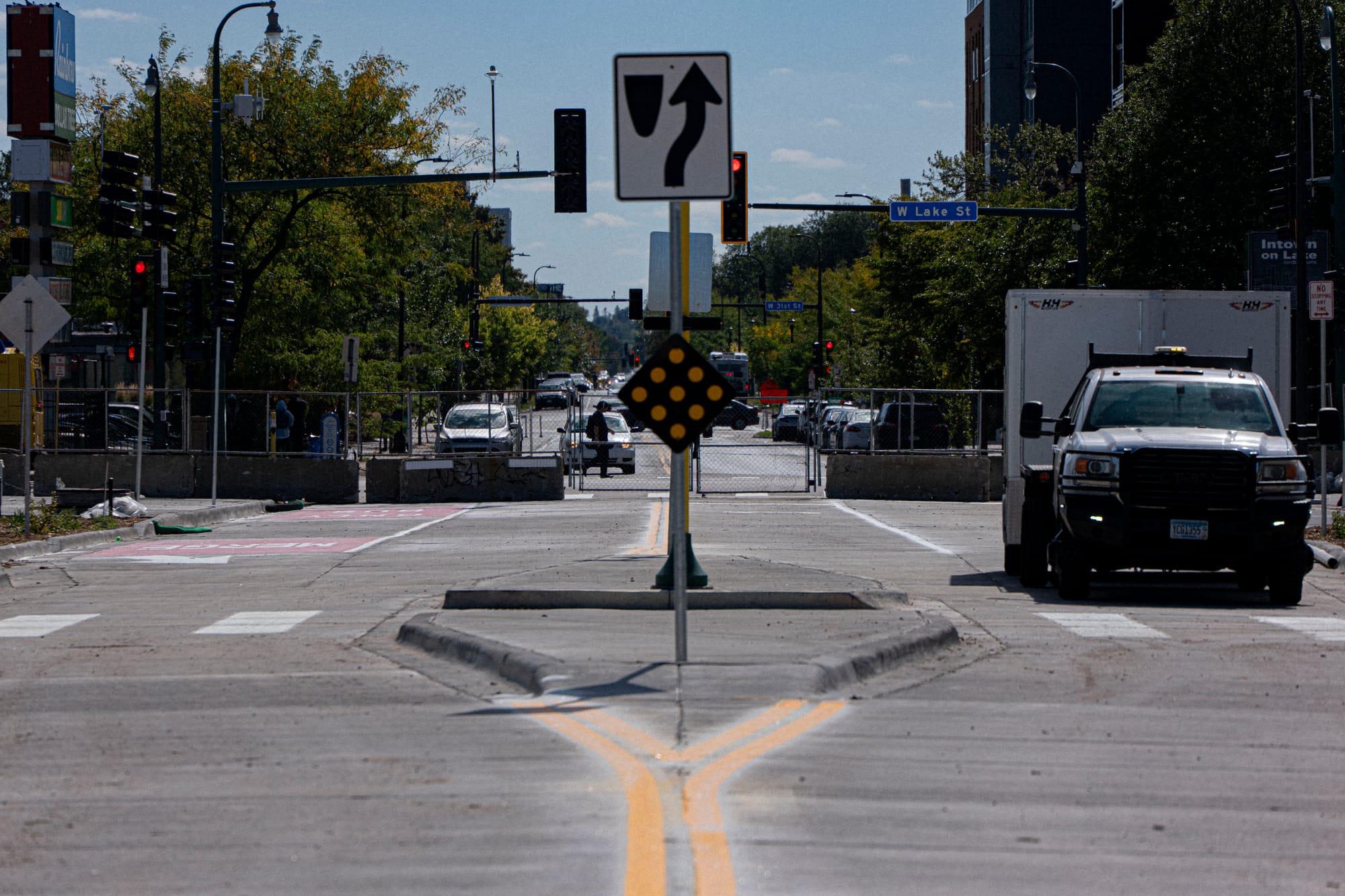
This car-brain mindset of modern life is one of convenience, consumption, and comfort. Modern living is about having a life where the end goal is to avoid death at all costs while simultaneously pretending that death is not a part of life. We are vulnerable living creatures that benefit from the comfort and convenience that was created from a history of our evolving species modifying the land through technology, language, and culture, transforming the world to work for us rather than us working reciprocally in collaboration with the land to sustain each other in perpetuity.
One of the things Berry discusses is how our individual character is shaped by our relationship to food and vice versa. Individual character in modern society is one that is built on the foundations of consumerism and passive consumption. With the rapid explosion in the human population in recent centuries, there are fewer and fewer people who tend to the land the way humans used to prior to the explosion of things like industrial agriculture, literacy, and technology in the last several thousand years. As a result, there are now more and more people who have become passive consumers of food whose stewardship of the land is not needed, resulting in a society that is largely desensitized to the process of food production. I'm one of those passive consumers, but I am trying to learn as much as I can about being more knowledgeable about tending to the land, and it is one of the primary ways I hope to continue to grow, change, and build community.
This is what Berry means when they say our relationship to food through our relationship to agriculture is reflected in culture, and in the ways that we relate to each other and land around us. A single person cannot change the entire world by relating to the land differently, but a single person can transform their own perception of life by relating to the land differently. It is not only a duty that we have as stewards of life and being, but it is a gracious opportunity to participate in something that is much bigger than all of humanity.
Standing on the north edge of the mid-block median, looking south towards Lake St -
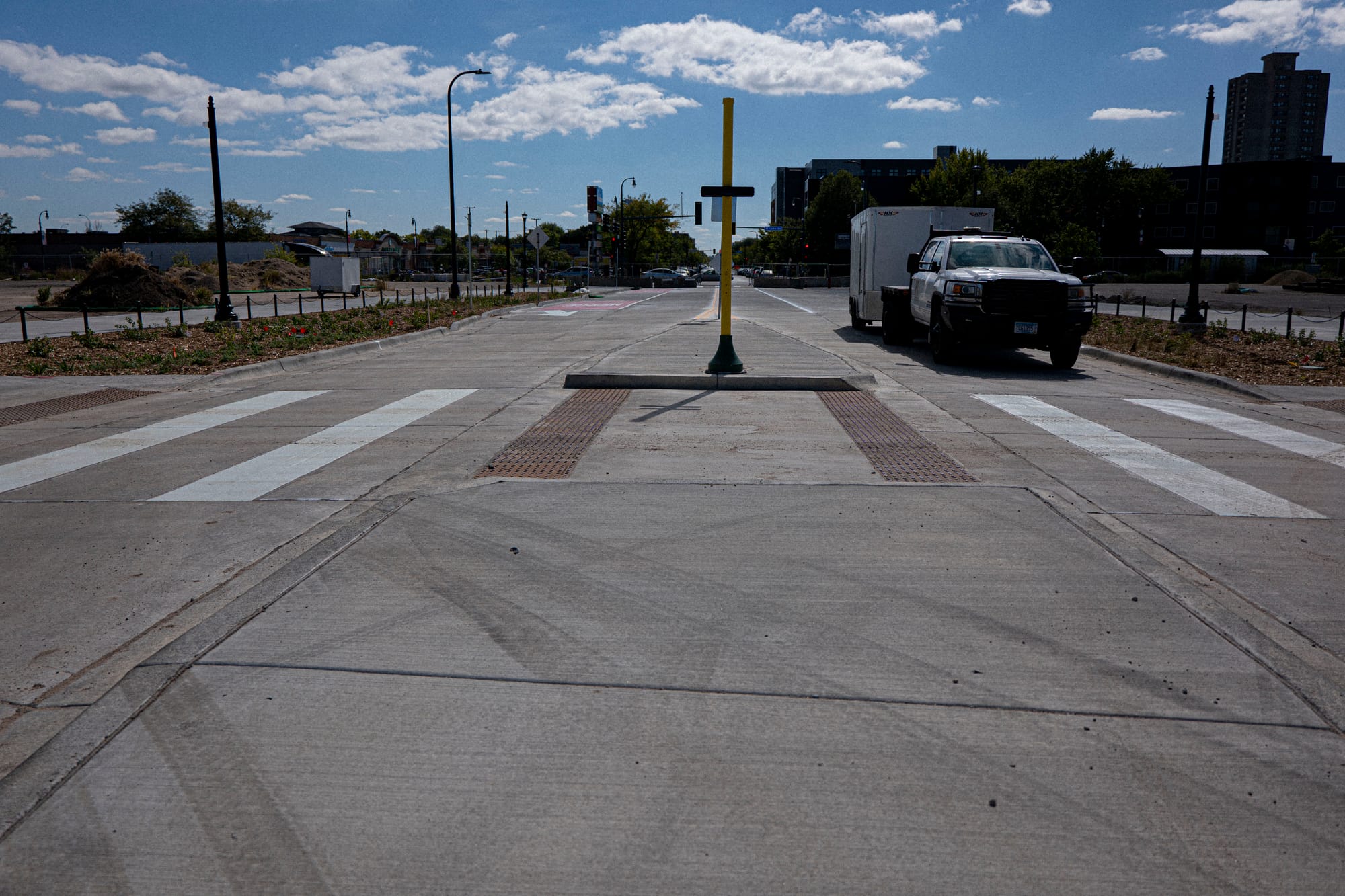
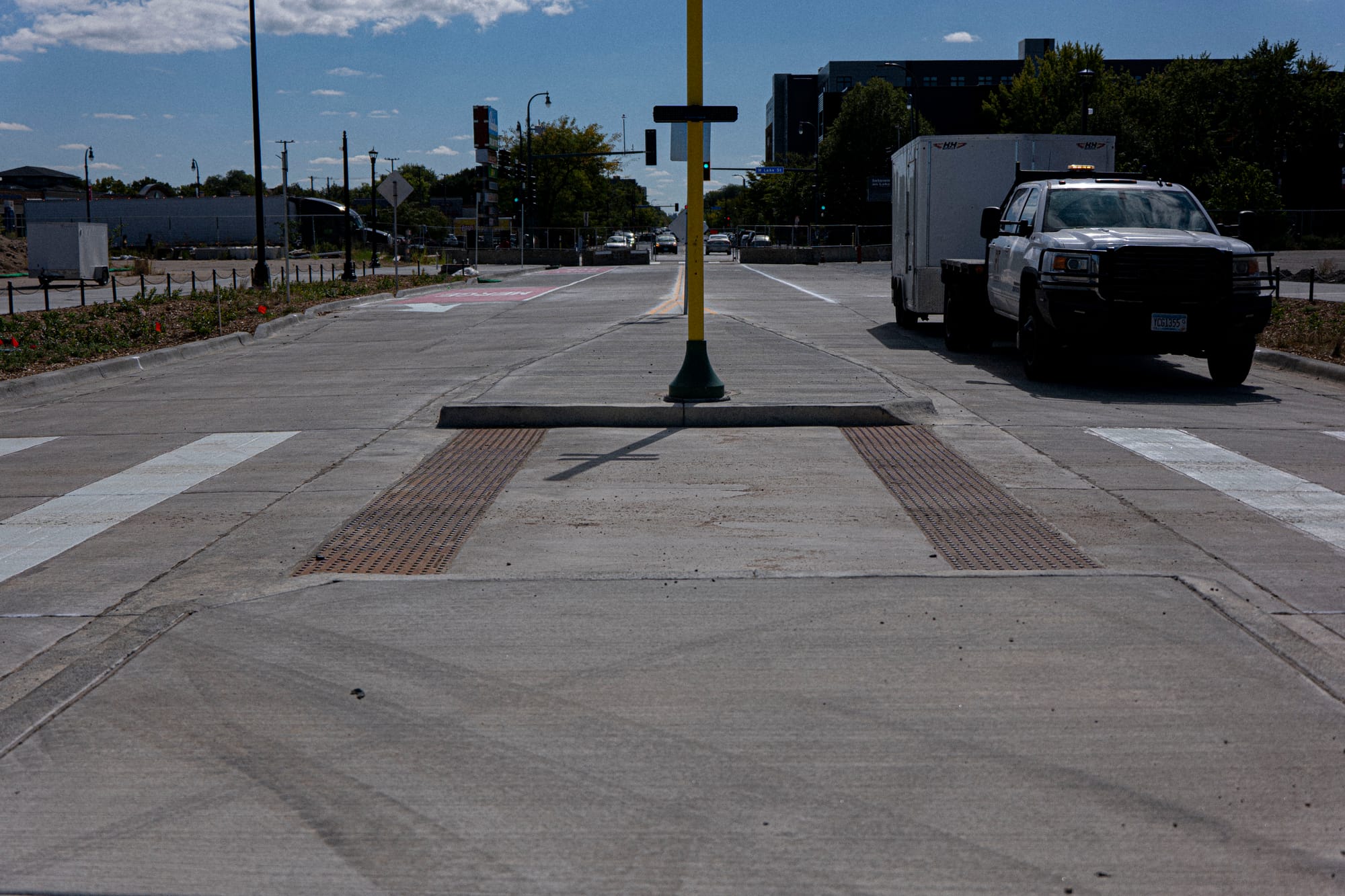
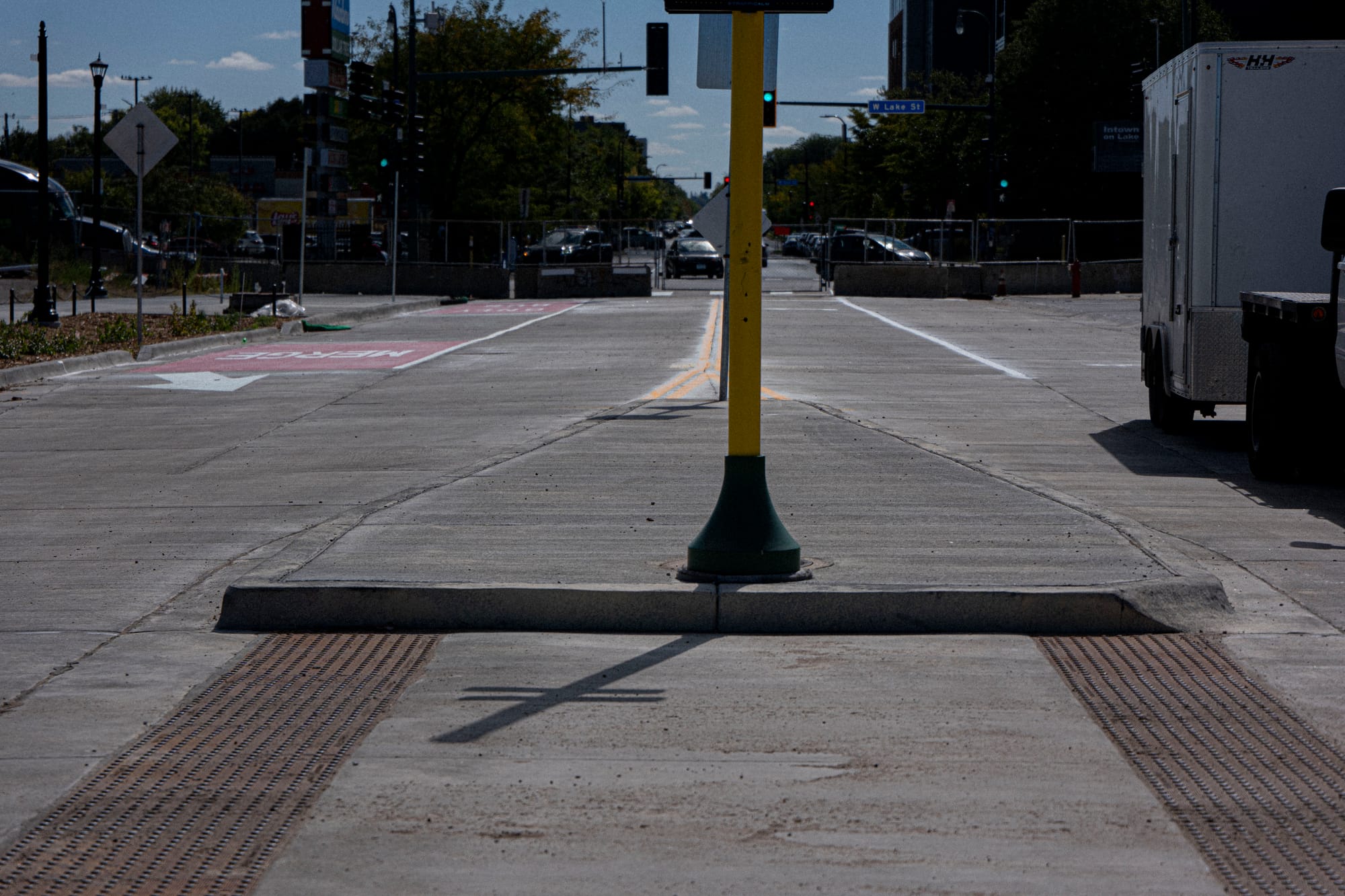
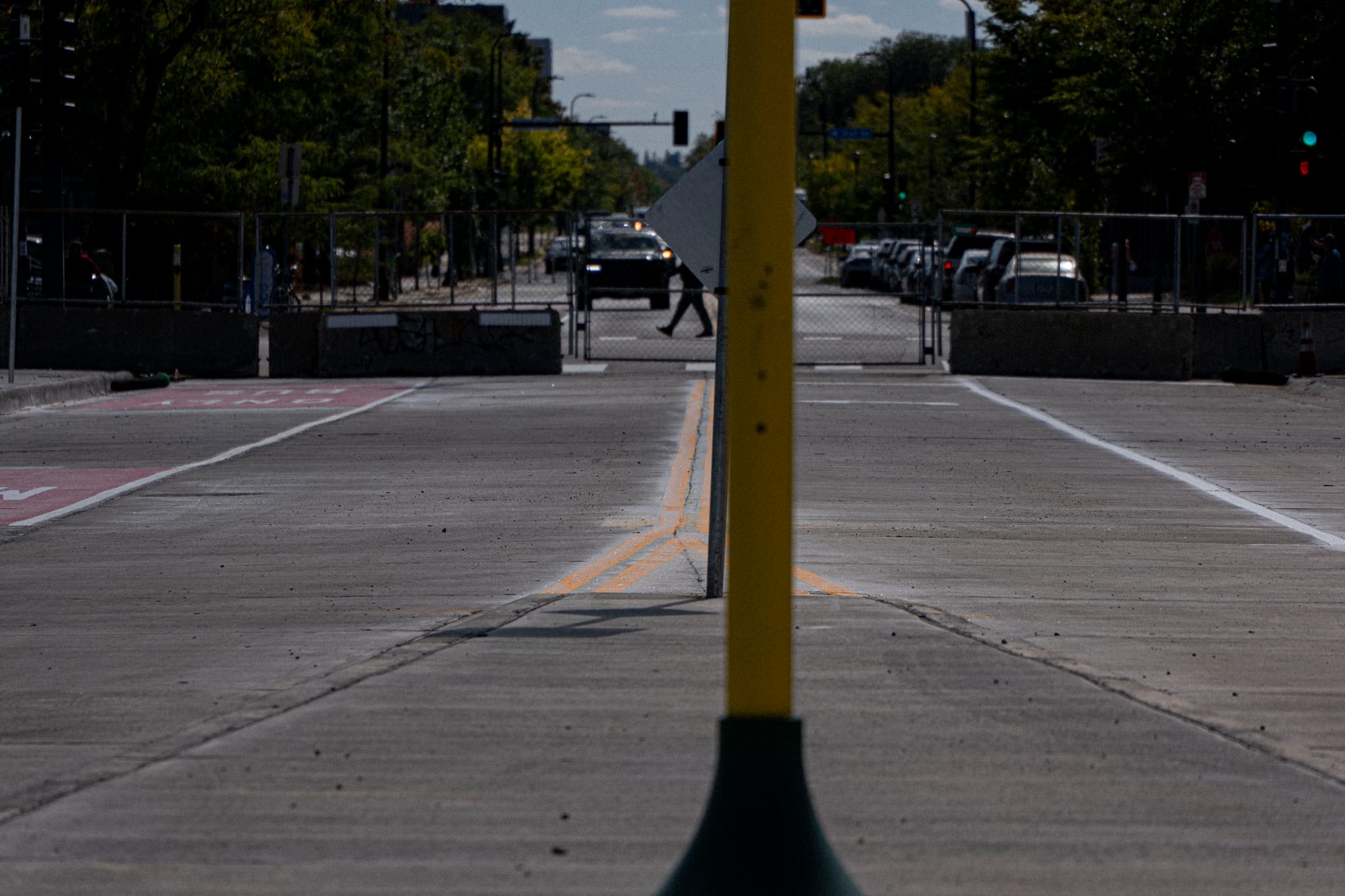
In regards to transportation, our individual character can be generalized as car-brained. While being car-brained prioritizes comfort, convenience, and mastering nature and death through denying their existence, we all have character faults and we all suffer from the comforts of modern living in our own ways depending on our own unique lived experiences. Some have more privilege than others in this system and that is an interwoven challenge among the challenges with our transportation system, but regardless, the roads connect us with each other no matter our socioeconomic privileges.
One of my biggest concerns, from the perspective of living in an urban center, is how wide roads are. Looking through some of the images so far, I cannot get out of my head just how massive a roadway feels when you stand in the middle of it. I recognize this project is unique given it will spur new redevelopment, but the emptiness this street creates is almost like its own type of liminal space.
All roads are treated as a space to optimize the movement of automobiles because those are the design elements that engineers design to (design speed, lane widths, etc). As a result, our roads are wider than they need to be, our buildings, and therefore, people are further from each other than what is necessary to coexist. By emphasizing speed over place in this way, we lose the ability to recognize the fragility of life, and the beauty of existence. By being concerned with only how fast we get from point A to point B, we lose out on the ability to simply exist in the world that we inhabit together.
Standing on the south edge of the mid-block median, looking south towards Lake St
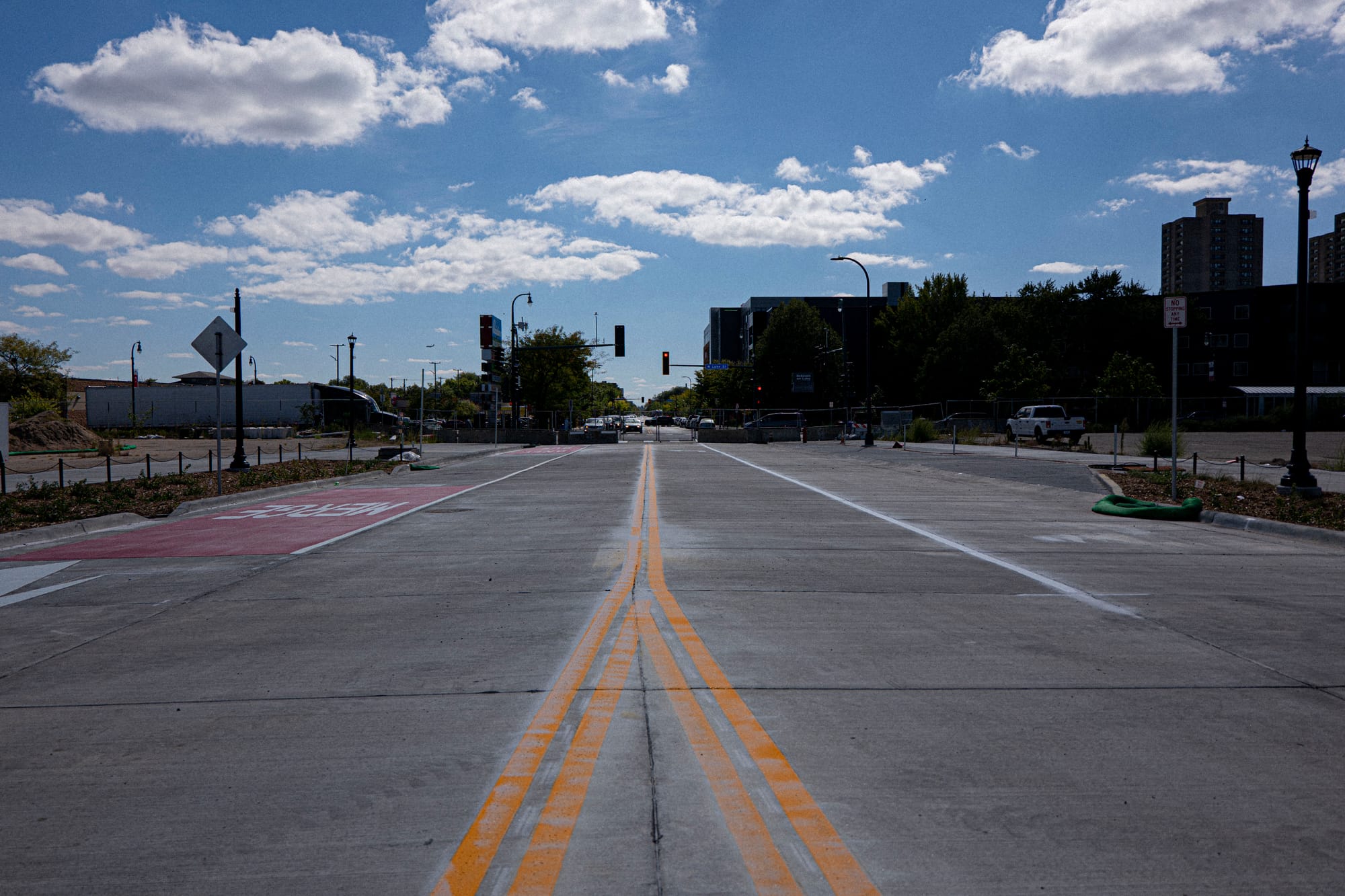
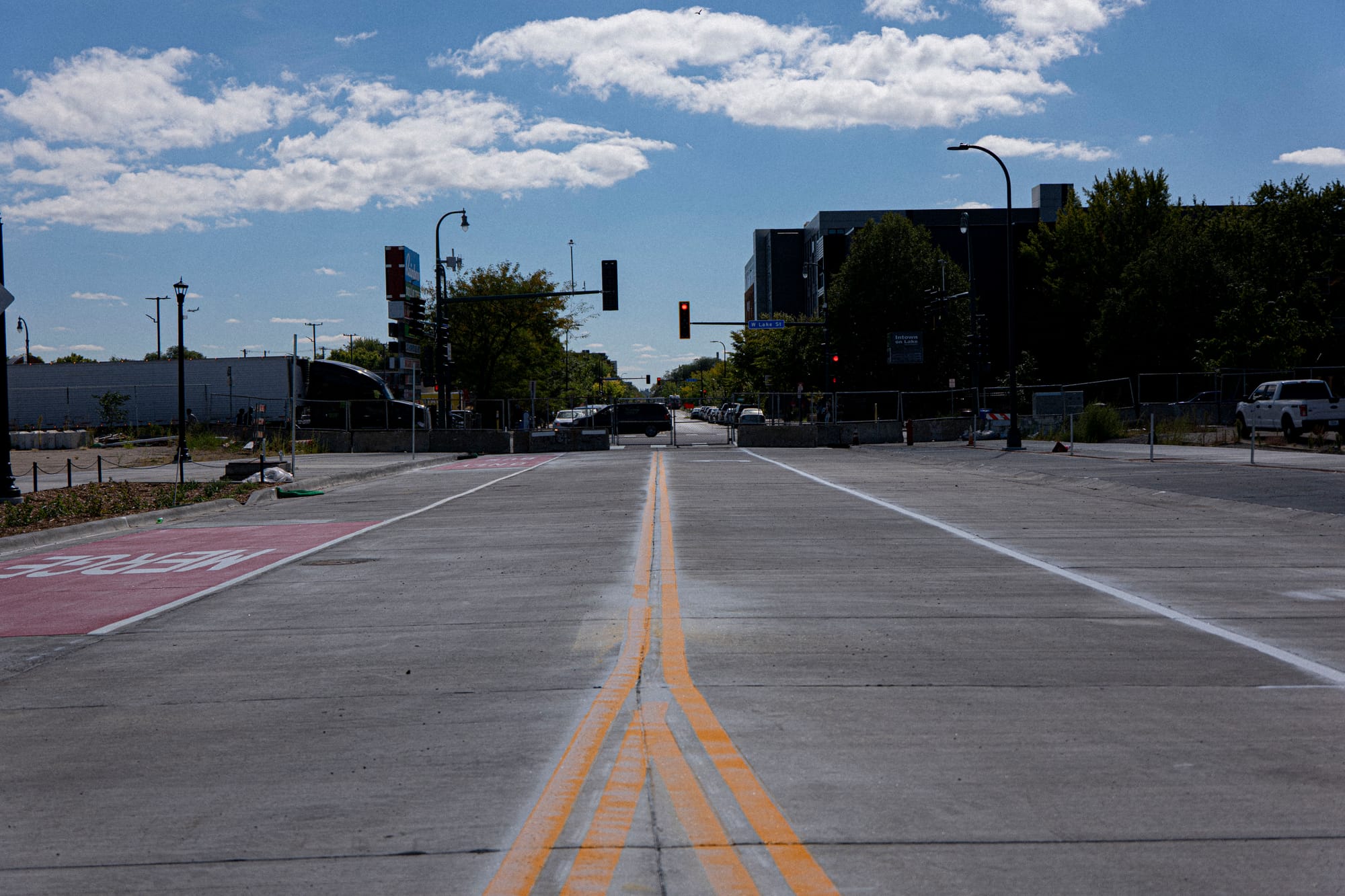
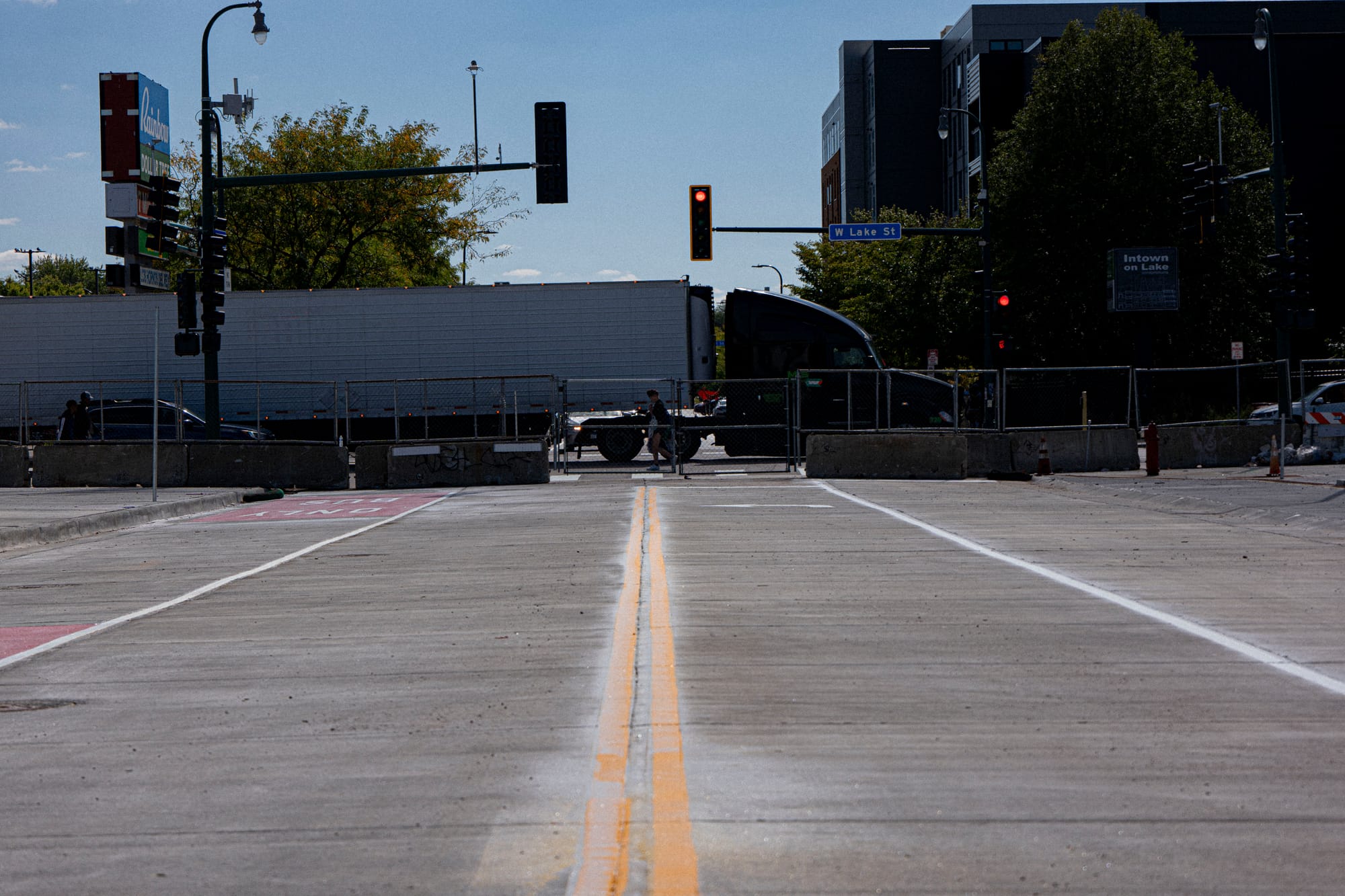
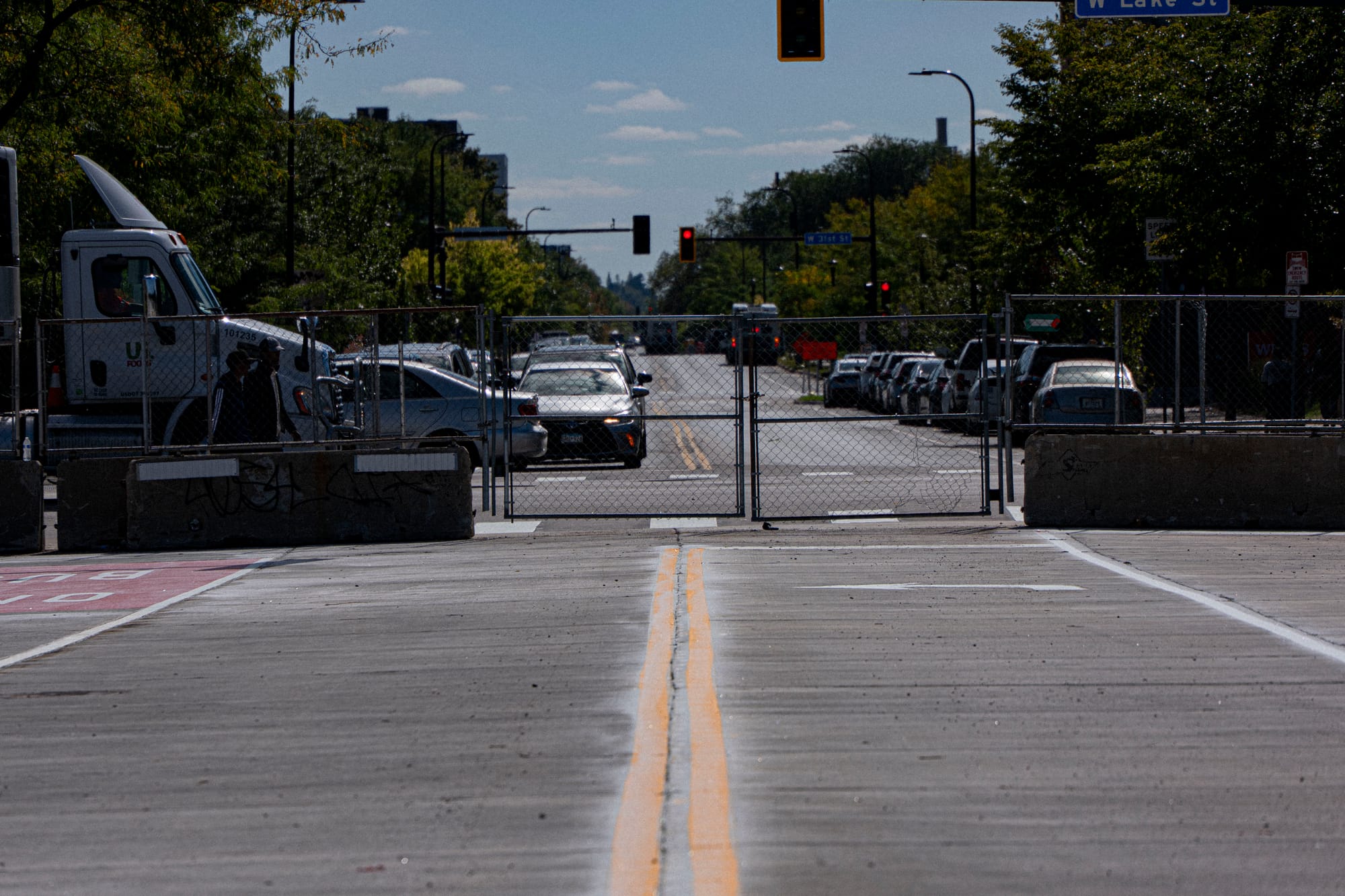
The design of the Nicollet project consisted of some community engagement, and my recollection of the engagement is a bit sparse, so I hope I don't misremember things, but I'll try to recall details as I can. There was an open house at the site around this time of year a couple of years ago. This was before the K-mart building was demolished, and there was a open tour of the potential public road improvements where people could vote from one of four potential options.
At a high level, three of the four opened up Nicollet to all motorized vehicles, and one concept had the roadway only opened up to busses, in terms of motorized vehicles. There were no options with bike lanes, and there was little consideration for Nicollet north of this project between this project's northern extents and the southern extents of the bus only stretch of Nicollet downtown. This entire stretch of Nicollet is not as bad as Lyndale in terms of a felt sense of danger from a biker-pedestrian perspective, but it still sucks. A middle turn lane takes up the entire stretch, all space that could have been dedicated to making our buildings and people closer together. A product of an engineered system dedicated to allowing cars to move and turn freely at the behest of quite literally everything else.
My recollection of the voting results is that the option not open to cars had the most votes from the public. Of course, the City decided against this public's best wishes and chose instead one of the designs that opens up the roadway to cars. The main reason being, from my recollection, concerns with delays in bus traffic coming north from south of Lake St, and the traffic study overlords win again, granting us a massively wide roadway that separates buildings with its excessive right-of-way, and lack of pedestrian friendly design elements.
Standing in the northbound bus lane, just north of Lake St intersection, looking south towards Lake St
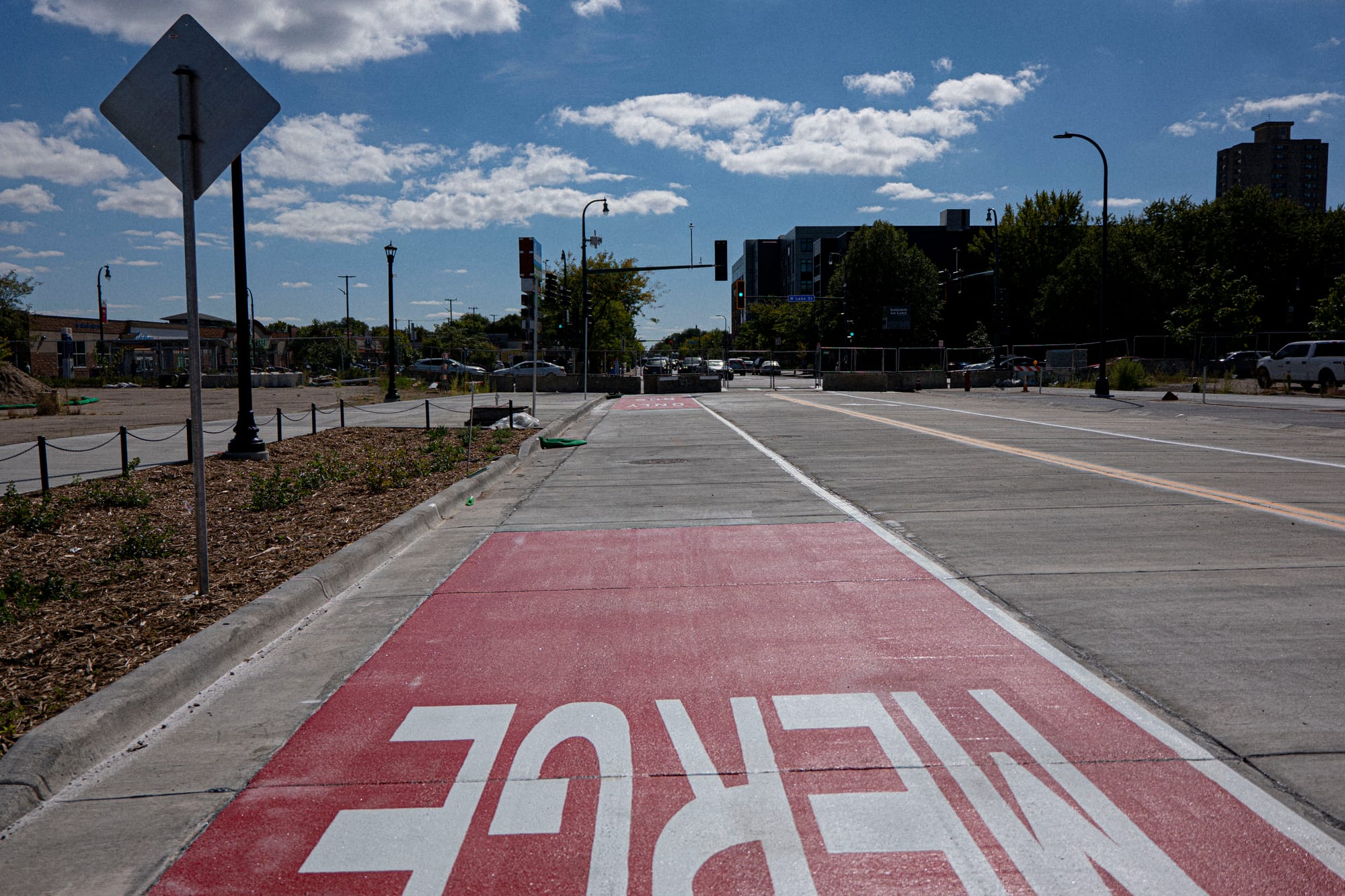
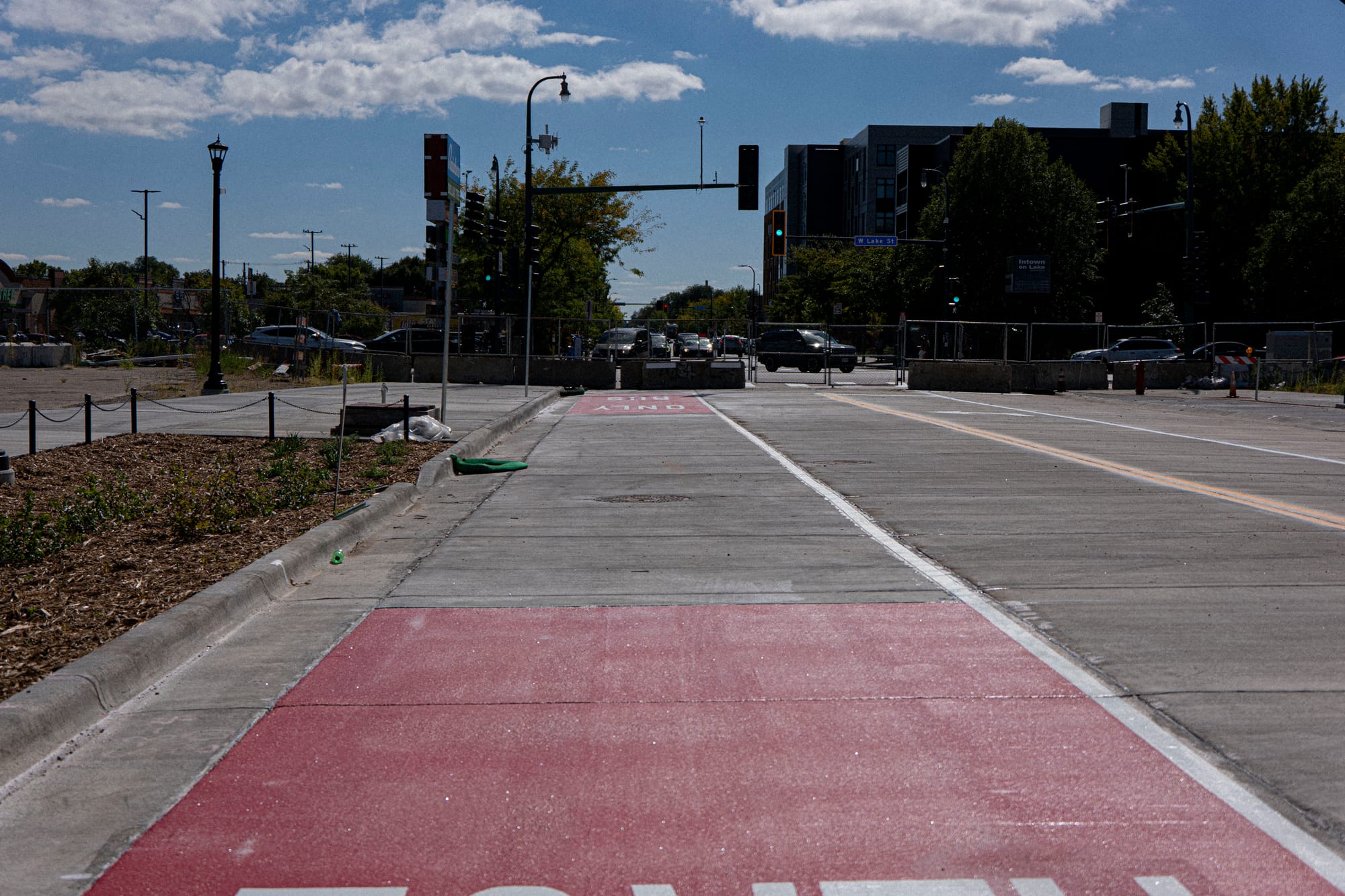
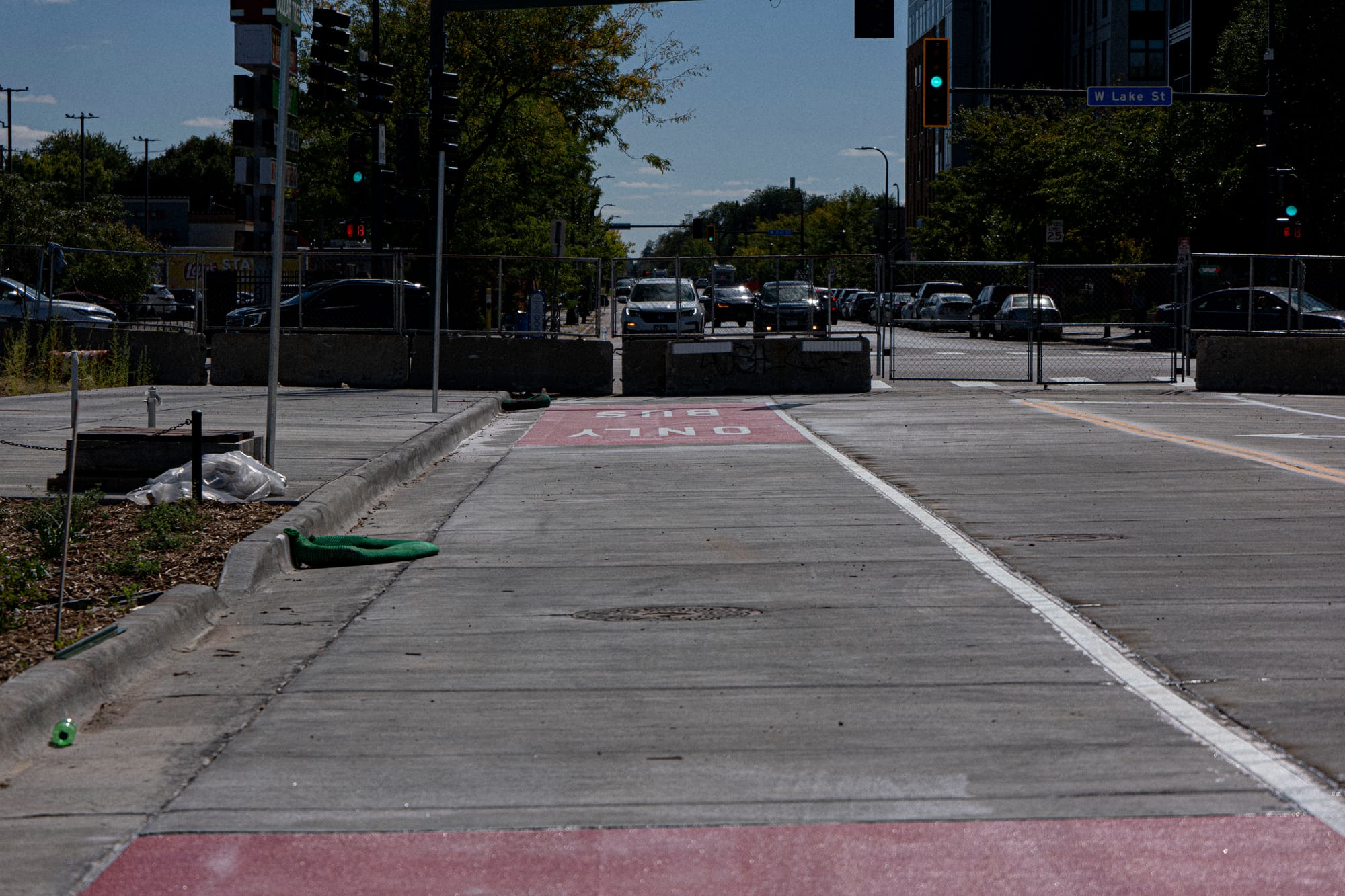
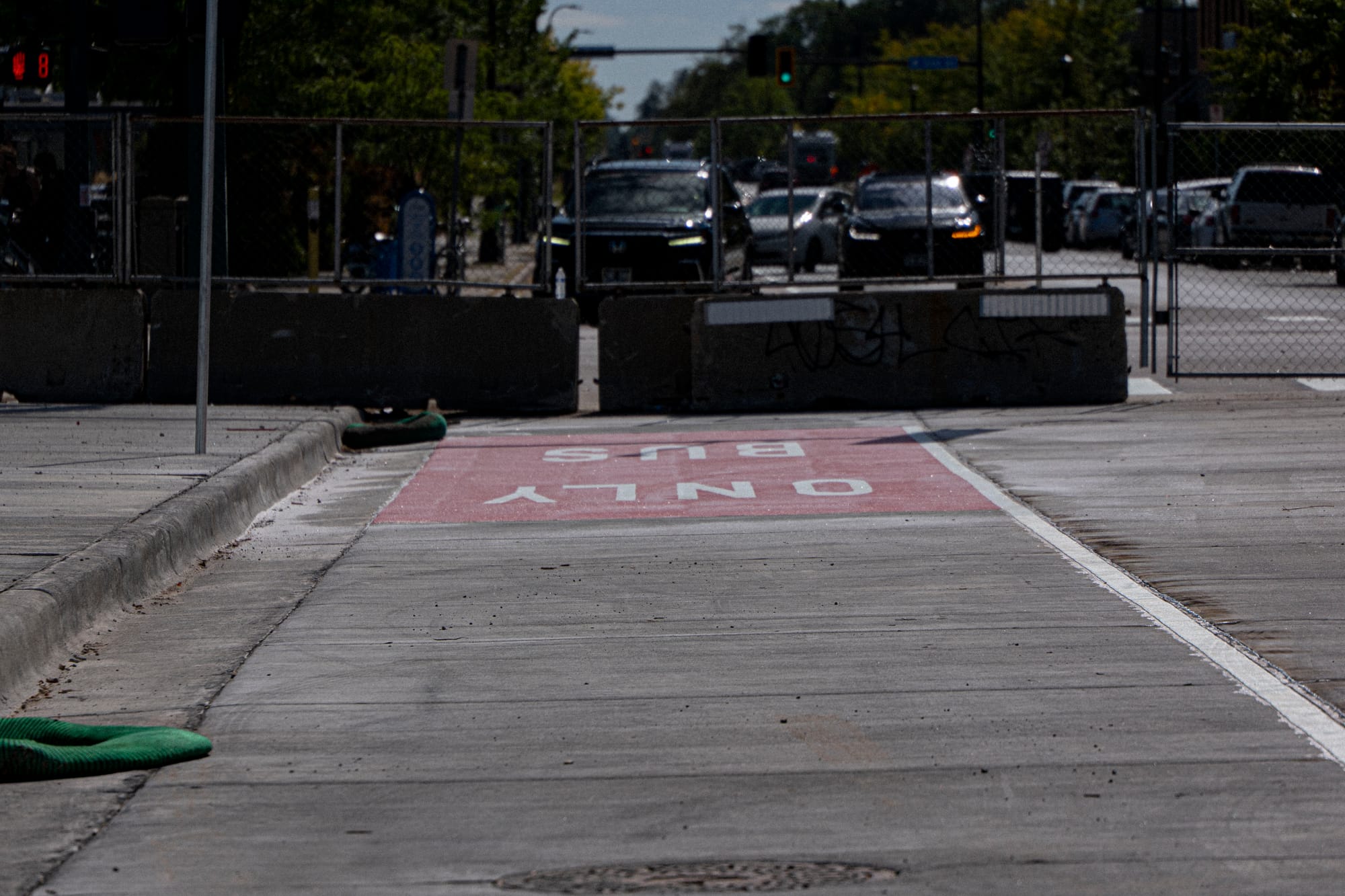
It does not surprise me that the City continues choosing to design things against the public's best wishes because that is how governmental agencies have always designed roadways since car-brain design methodology took over. Being a traffic engineer requires believing that we can master the transportation system (which is impossible) through modelling efforts and by following outdated rules of thumb and design regulations.
This roadway could have been half as wide and allowed for much more developable space, allowing for more housing for example, but there are not design standards in our planning/zoning regulations that allow for pedestrian friendly only designs. We are stuck with design standards that emphasize our reliance on the automobile. These standards are what makes urban living in most American cities so spread out, and these design standards spread out through all of suburban sprawl, reaching towards the outer extents of urban development where we start encountering the altered agricultural land that helps feed us.
Our transportation network is designed to spatially prefer large distances between nodes. This type of preference makes the car nearly necessary to function in society. We need to design everything in the opposite manner in order to achieve the opposite end goal. If we want things to be walkable and accessible, they need to be closer together. If we want things to be closer together, things need to be designed and built that way.
Standing on the east sidewalk, just north of Lake St intersection, looking north towards greenway bridge
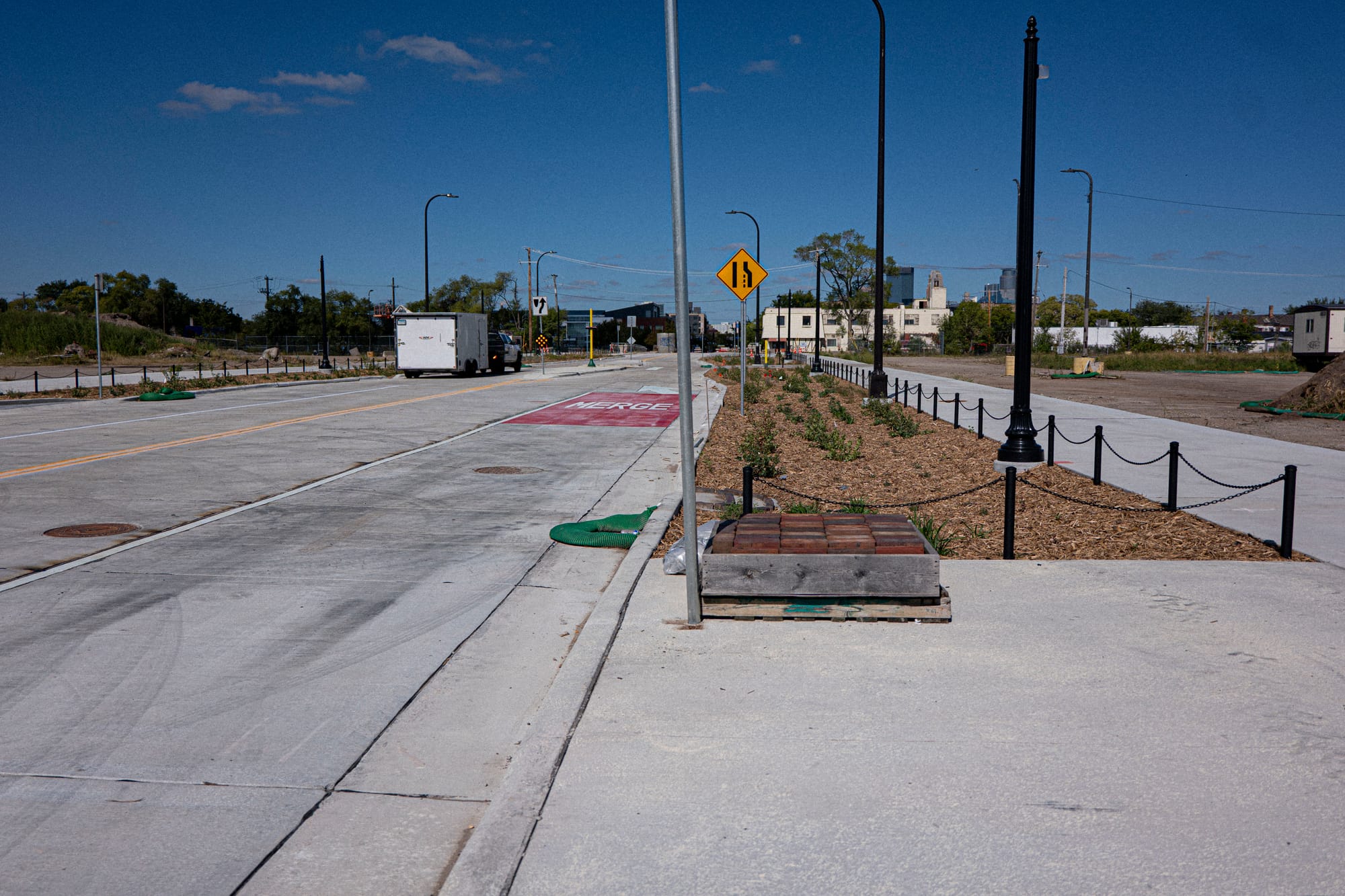
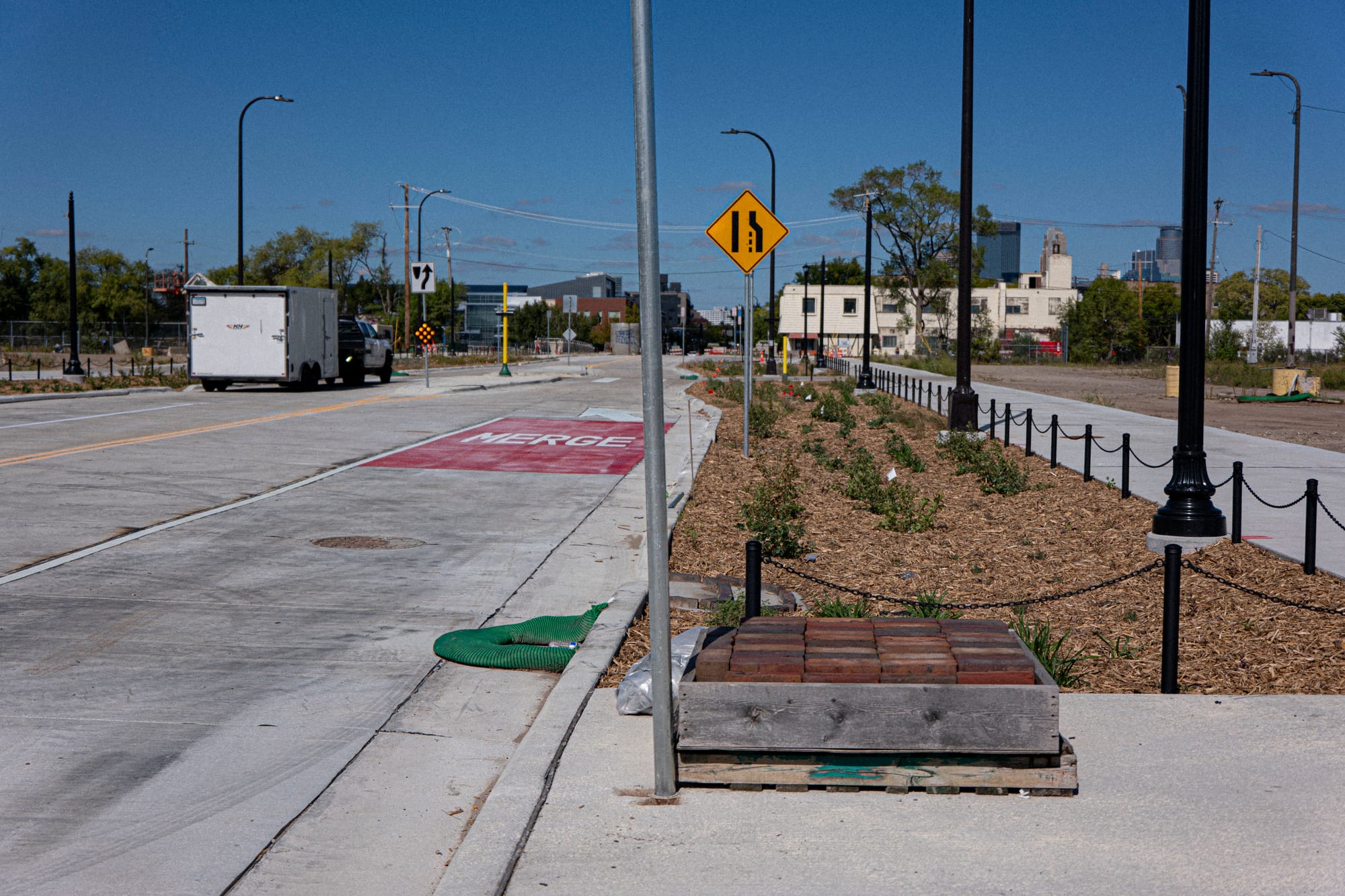
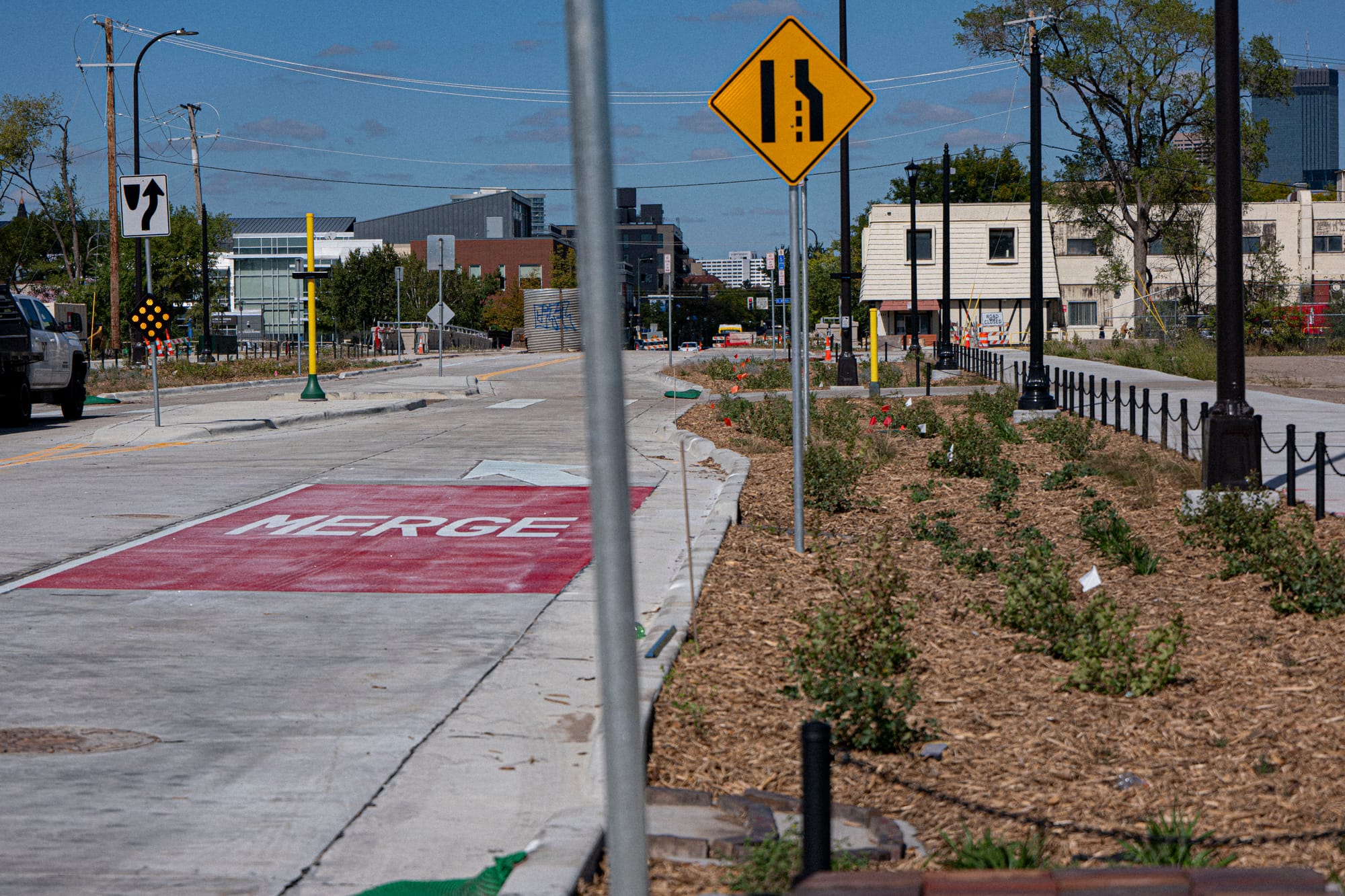
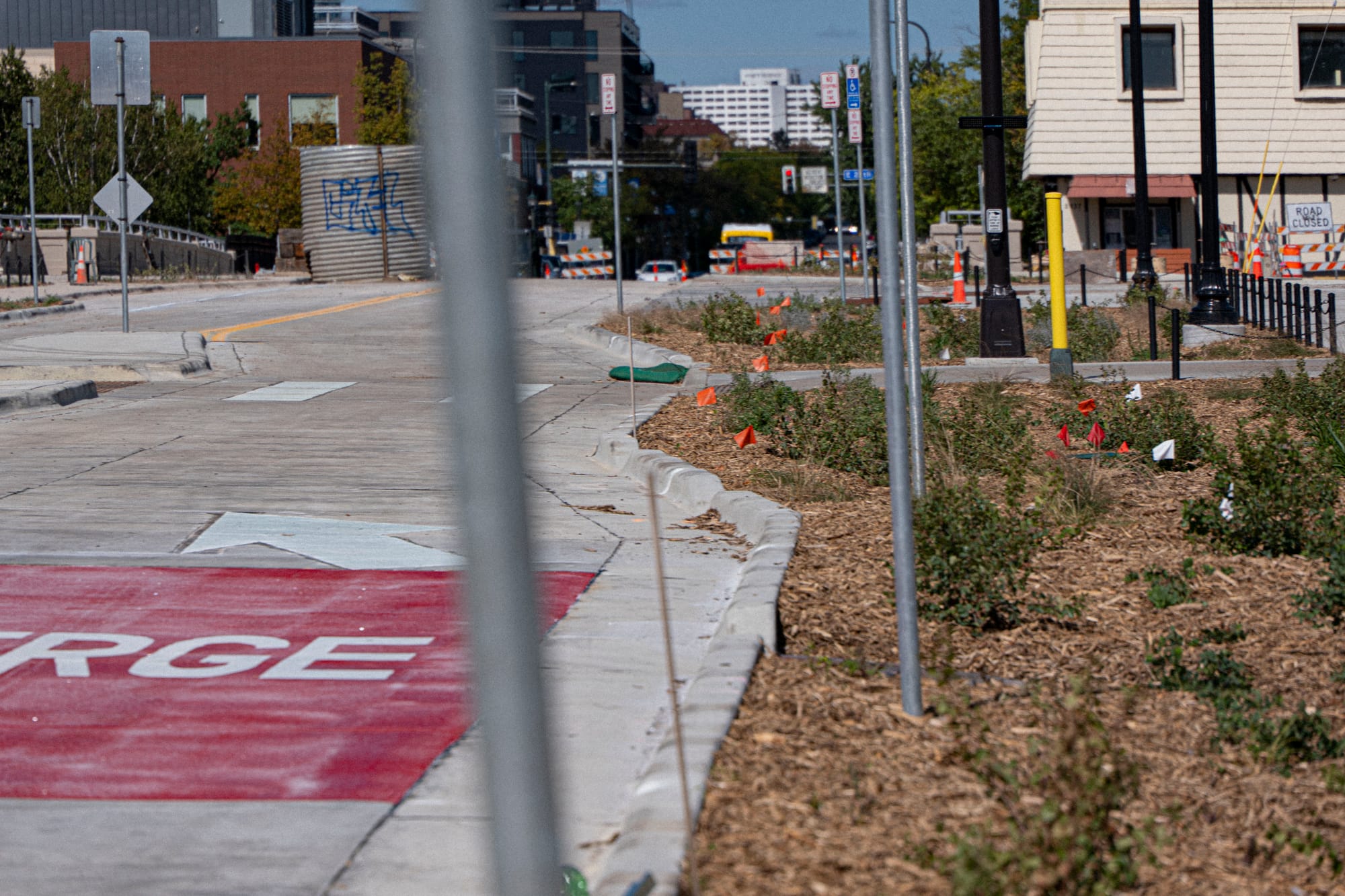
The distance between the food that we consume and the place where it originates is astounding, and it goes to show how being so disconnected from the energy sources that sustains us is again a place of convenience, comfort, and consumption. There are a lot of issues with not knowing how to tend to the land, but how do we even start discussing this when tending to the land is something the system avoids acknowledging in the first place?
This is where referring to Berry and individual character is revealing. It doesn't take much to learn about food. One can buy a house plant, participate in gardening, or just simply cook the food they buy rather than always buying pre-prepared food. There are many ways to change how we relate to food, and I think it is really important and also really enjoyable to do so.
Standing in the middle of the road at the Lake St intersection, looking north towards greenway bridge
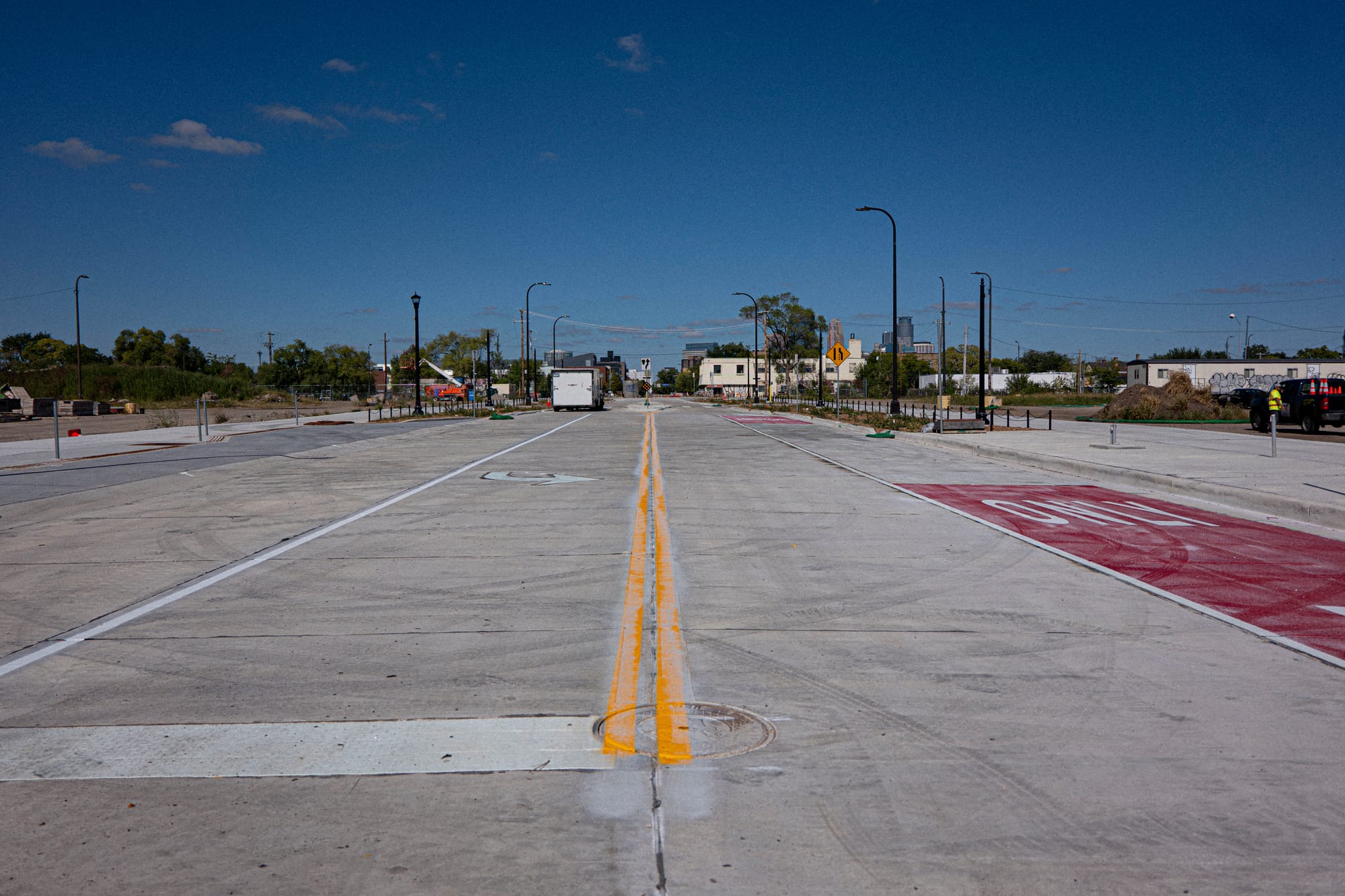
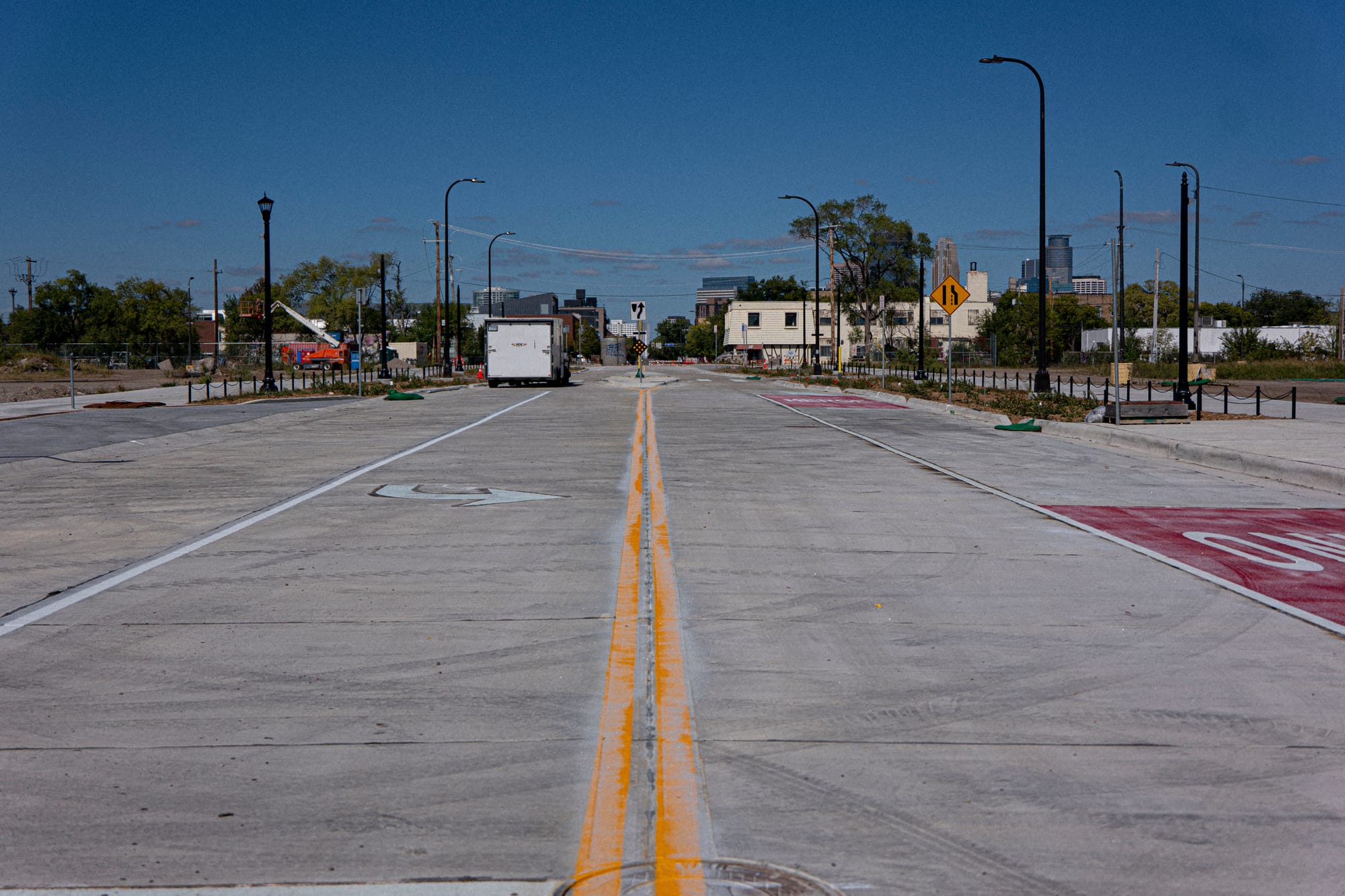
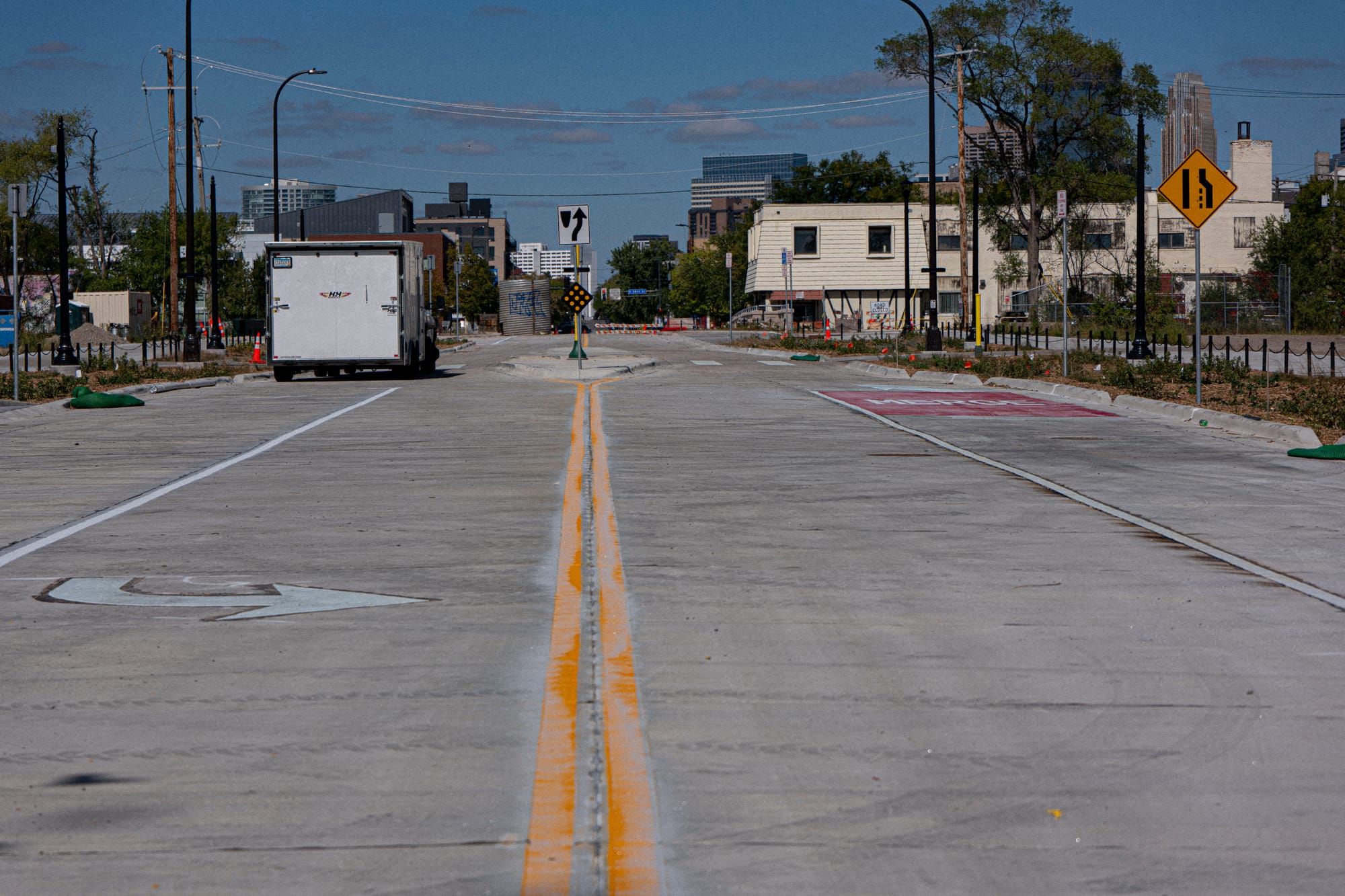
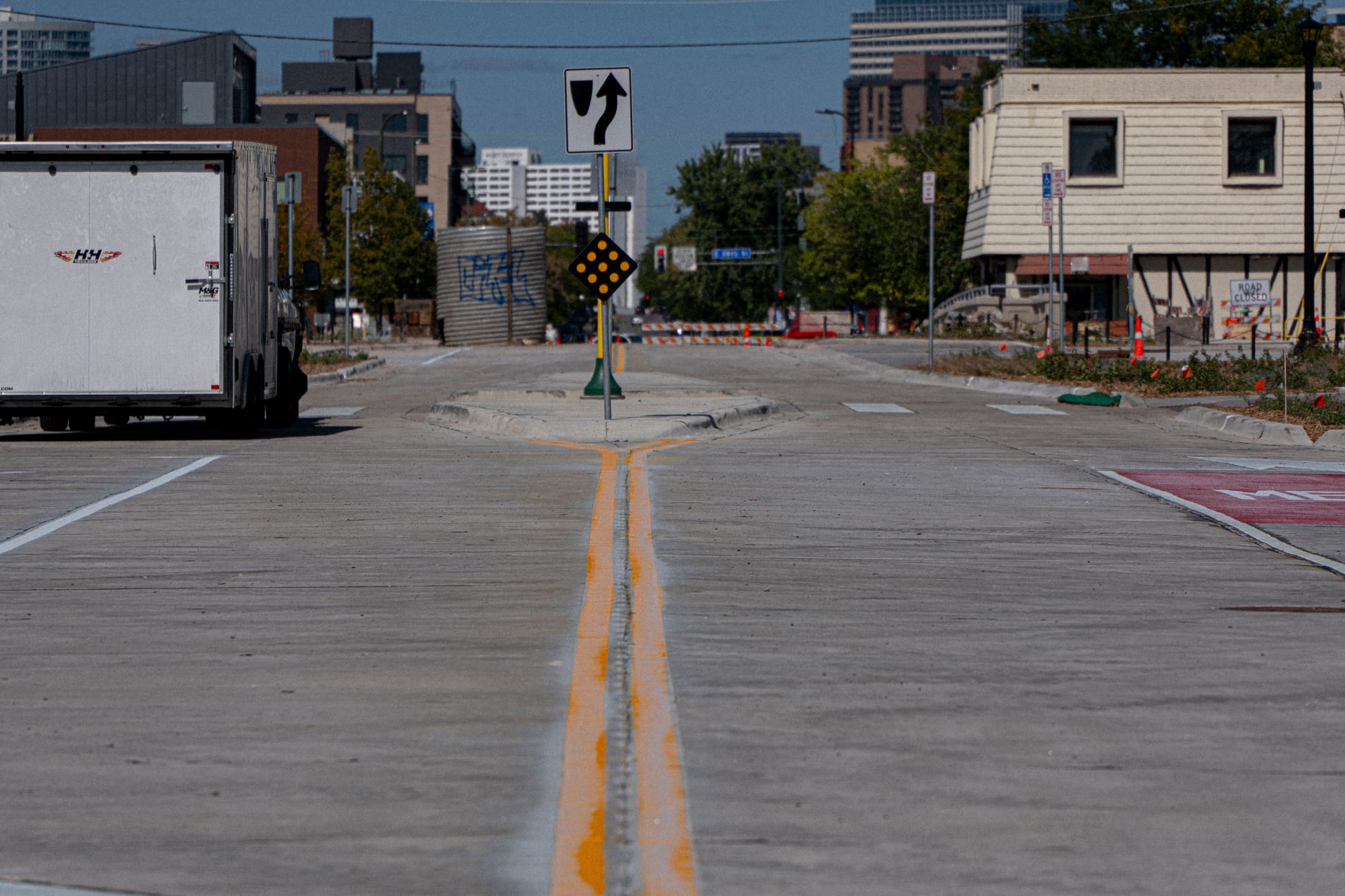
The road dominates the image at greater zoom levels compared to the fleetingness of the sidewalks when zooming in. The width of roads fundamentally does two things that I find very concerning. It makes building spaces further away from each other than they need to be. This increases risks in traffic violence, street violence, and systemic violence. When everything is further away from each other, things that we need becoming harder and harder to reach.
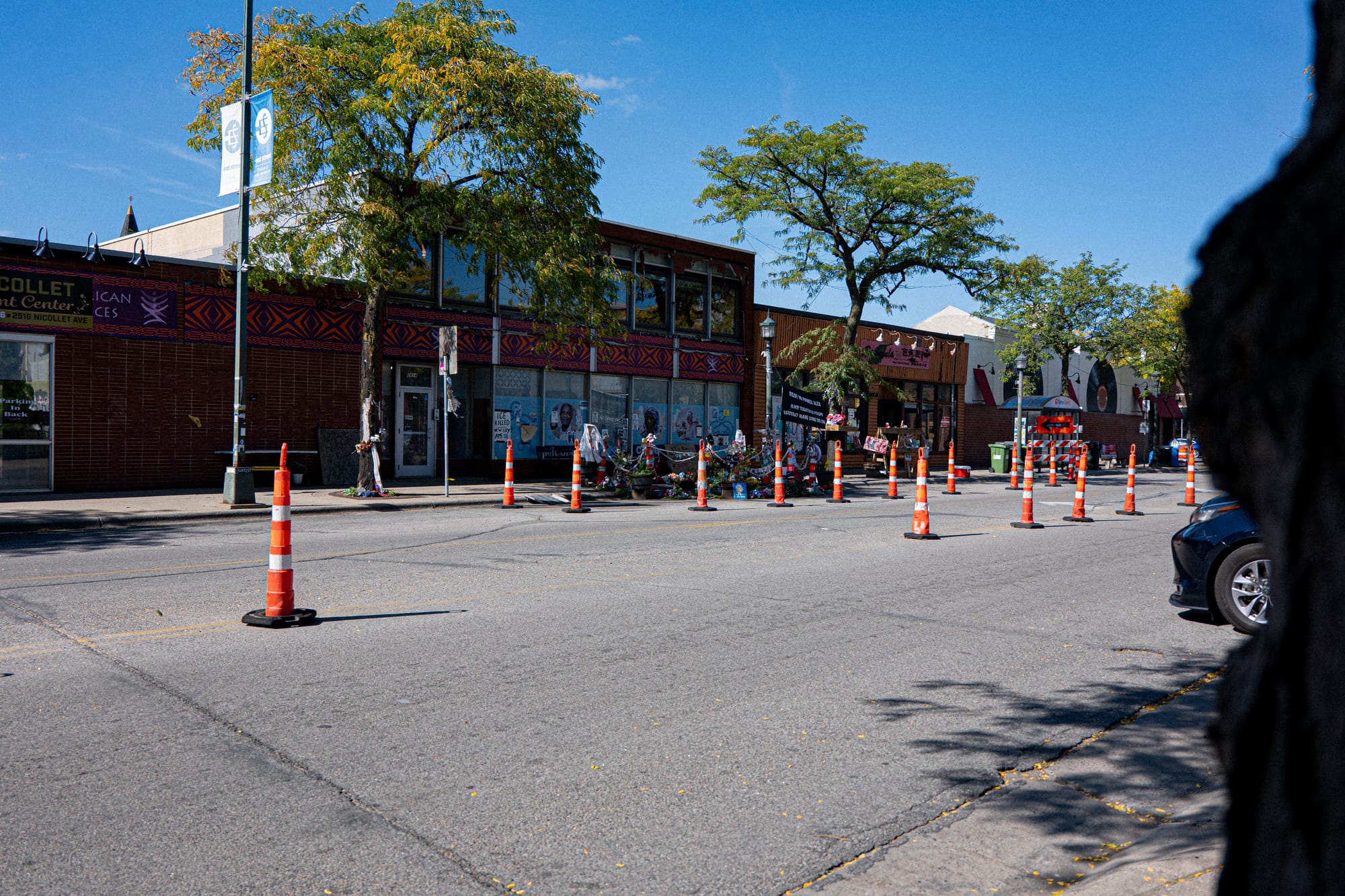
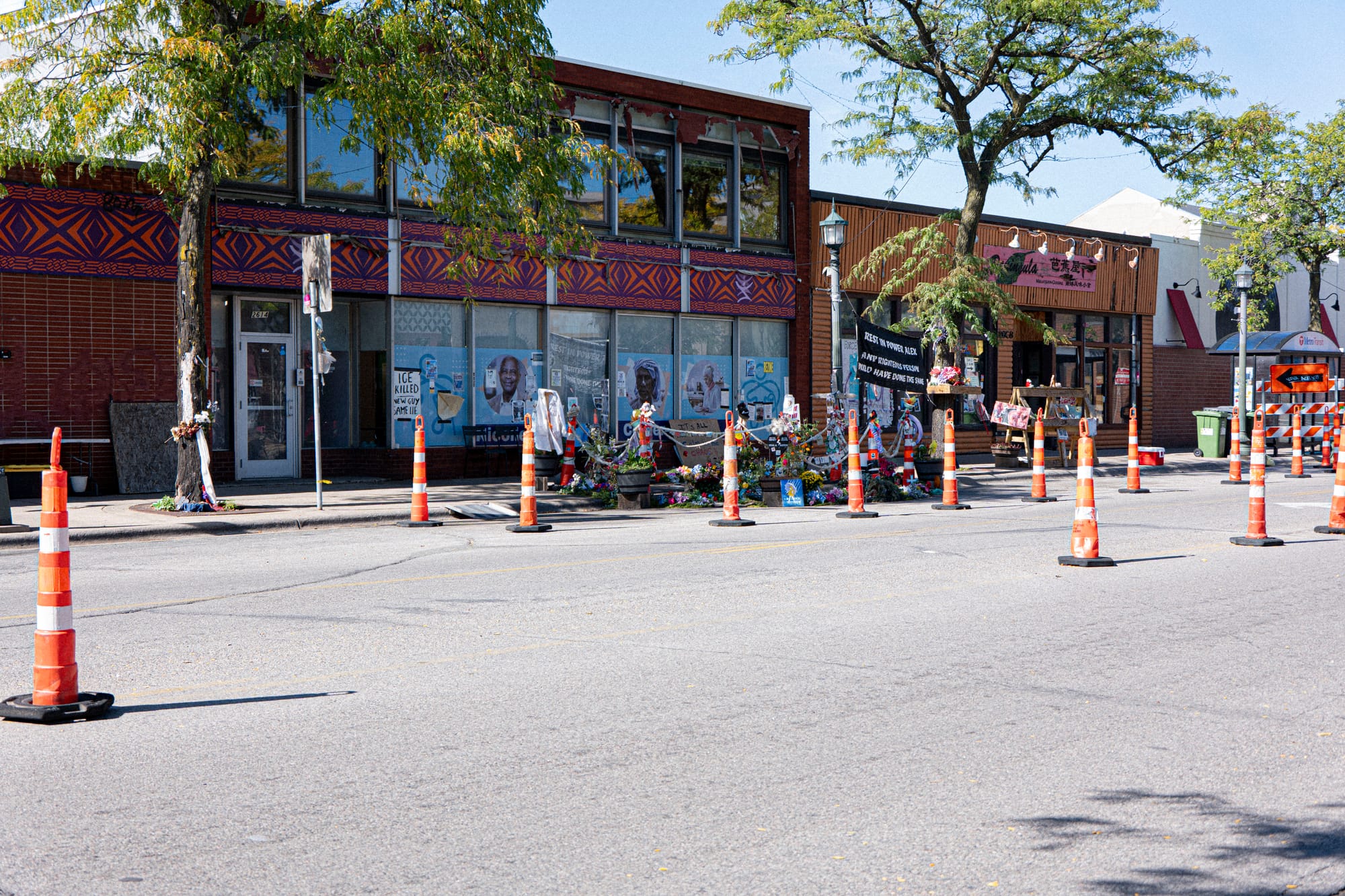
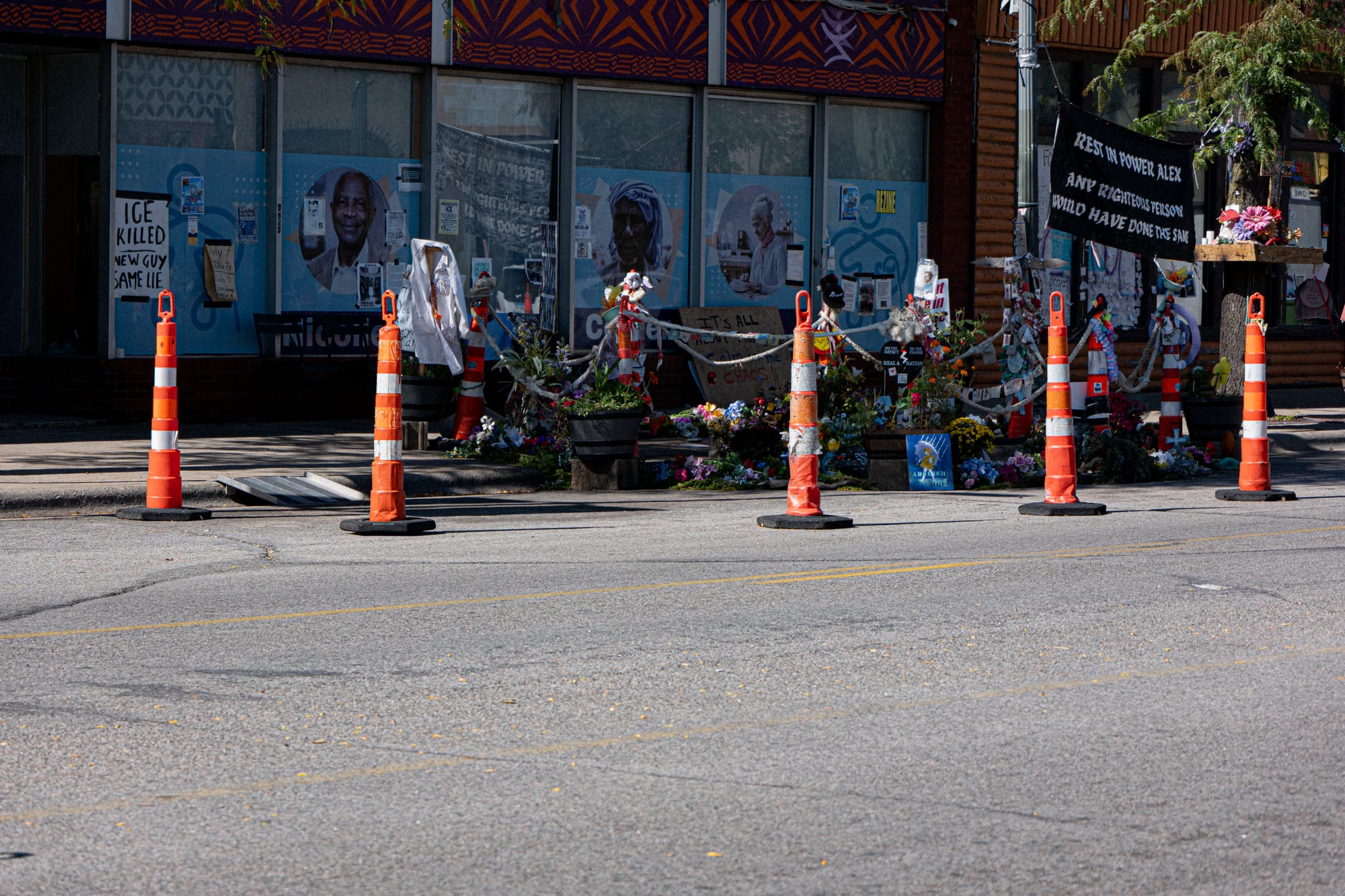
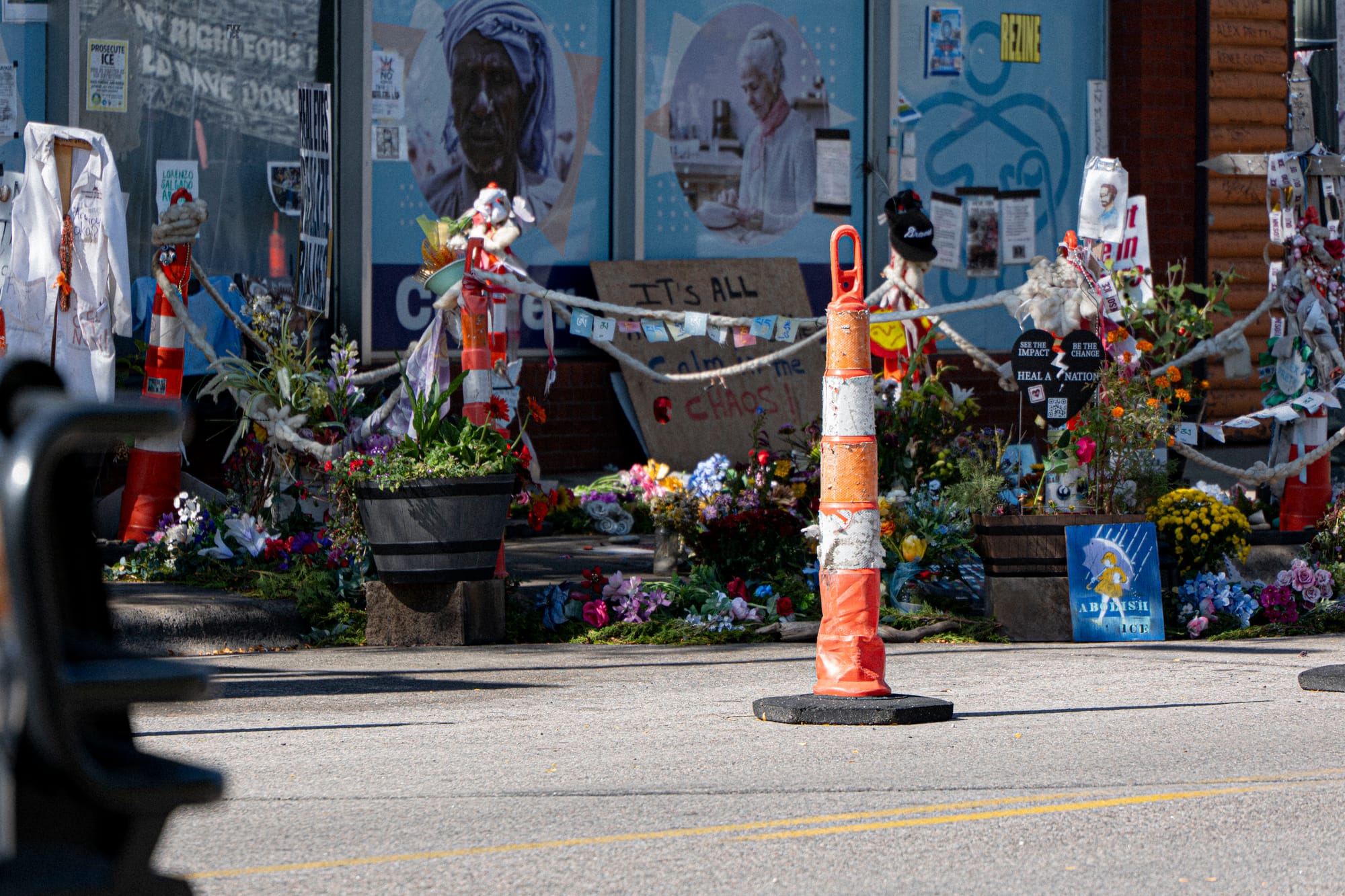
The loss of life is tragic, and it comes in many shapes. Losing a community member to state-sanctioned violence this past year has transformed how we relate to ourselves, each other, and our community, but just look at what humans can do when they prioritize the importance and sacredness of life. By recognizing the sacredness of a lost life, we have carved out a space for reflection, we have shifted traffic patterns without having to build anything new or obtain a bunch of permits and approvals. We are capable of changing the world without having to turn it upside down, but we have to be willing to do so.